Tag: Weather Stations

We’re called The Weather Station Experts for a reason. Read all of our blog posts, reviews, and advice on weather stations here.

  • KestrelMet 6000 ReviewKestrel's first home weather station is a home run, for the most part

    KestrelMet 6000 Review
    Kestrel’s first home weather station is a home run, for the most part

    Kestrel makes incredible weather meters, but can it also make a great home weather station? We have our answer, and it’s the KestrelMet 6000. The station comes in two flavors: a cellular model for $1,299 and a Wi-Fi model for $999. While the pricing isn’t much different from the Vantage Pro2, the cellular version is $1,000 cheaper.

    The KestrelMet 6000 is different from anything Kestrel has released before. Unlike its weather meters, it is meant for fixed use. It’s also a large station, roughly the same size as the fully assembled Davis Vantage Pro2. We tested the Wi-Fi version, but I’d opt for cellular for remote use or where Wi-Fi connectivity might be poor.

    KestrelMet 6000 Standard Features and Options

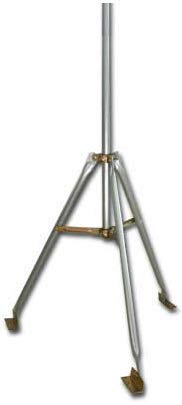
    The 6000 measures all the basics: temperature, humidity, wind speed and direction, barometric pressure, and rainfall. A leaf wetness sensor ($149), a solar irradiance sensor ($199), and a soil sensor kit ($599) are also available, but most will find the standard sensors more than sufficient. You’ll also want to choose a mount: Kestrel offers a tripod ($99) or mono mount ($69) built specifically for the KestrelMet 6000.

    “Prosumer” weather stations don’t have much competition because they don’t sell in as large numbers as cheaper weather stations. Comparable weather stations here would be solely from Davis: the Davis Vantage Pro2 or Pro2 Plus. However, either model needs additional hardware to connect your station to the Internet.

    Unlike the 6000, the Vantage Pro2 requires a bit more installation. You also gain fan aspiration (only the Pro2 Plus offers this). In our experience, the 6000 is as accurate as a Davis station, with better tools to view and analyze your data.

    As long-term owners of a Davis Vantage Vue weather station, we were especially interested in finding out how the 6000 performed against the Vantage Vue. While the Vantage Vue generally did well in providing accurate readings, we noticed a difference in temperature readings on sunny days. The Vantage Vue would report about 1-2° too high in these situations.

    Still, with the new WeatherLink Console, the Vantage Vue might still be an option for those who don’t have $1,000 to spend on a weather station.

    The 6000 and the Tempest are smart home-ready weather stations with IFTTT support. However, the KestrelMet is superior to the Tempest in almost every aspect. The only things the KestrelMet 6000 doesn’t have are lightning detection (which we think is one of the Tempest’s standout features) and solar and UV sensors.

    Readings on the 6000 are also much more accurate overall, especially in terms of rainfall. While the haptic rain gauge is innovative, it isn’t as precise as the traditional tipping cup rain gauges in most home weather stations.

    Installation

    Kestrel ships the KestrelMet 6000 almost entirely preassembled, requiring minimal work. In the instruction folder, you’ll find extra screws, a screwdriver, and an Allen wrench. Attaching the anemometer was the most work I had to do, besides securing the mast to the mount. As a result, you’ll probably spend about 20 minutes on this part of the process. The instructions were also clear and easy to follow.

    KestrelMet 6000 instruction packet and tools

    Kestrel took time to ensure the installation process was smooth. I had fewer issues setting this up than some Ambient Weather stations I’ve tested. Most of my installation time was spent getting the sensor suite level (necessary for rain gauge accuracy). You’ll want to have a level close by that is at least as long as the diameter of the rain gauge bucket. While your phone will work in a pinch, a level will make this much more manageable.

    Be sure to flip the power switch on the bottom of the sensor suite after setting up the sensor on your Wi-Fi network. This will prevent false readings from being measured while you install your station on the mount. Remember to switch it back on after you’re done with the installation.

    Nielsen-Kellerman owns both Ambient Weather and Kestrel. Rather than creating an entirely new platform, the 6000 connects to the Ambient Weather Network. Since a console isn’t included, you can view data using the AWN app or website.

    KestrelMet 6000

    Our Experience

    We hate to return to the price, but it is a significant factor. Very few weather stations are this expensive, so the KestrelMet 6000 was given a closer look than other stations we’ve tested. And it met our expectations.

    A few things are going for the 6000, which make it so good:

    • The 24-hour aspirating fan continues to read accurately in direct sunlight and is a standard feature.
    • Bird spikes keep your feathered friends from relieving themselves in your rain gauge.
    • Sensor accuracy across the board is top-tier.
    • It’s easy to add additional sensors, which are automatically detected.
    • Strong Wi-Fi. We have the station 200 feet away from our closest access point without any issues.
    • The Ambient Weather Network app is well laid out and easy to use.

    I did have some issues with the barometer, though. During setup, the station searches for the closest official weather station and then adjusts it based on the elevation difference. That didn’t seem to work, as my readings were still off. However, this might be a glitch on AWN’s end: I’m currently investigating this with Kestrel support (the barometer is factory-calibrated, so no adjustment is available).

    Update—7/17/23: Kestrel apparently fixed this issue in early July, which was caused by a software bug. Barometric pressure readings are now correct.

    The 6000s’ omission of solar/UV data is odd. These sensors are included in even the cheapest Ambient Weather stations and the WeatherFlow Tempest. There’s also no lightning sensor (at least at the moment). Otherwise, the station is almost perfect.

    Update: Not long after our original review, Kestrel added this as an option at purchase.

    Others have not been so smooth.

    In the two years since our review was posted, we’ve seen some reports of reliability issues, including early failure of some sensors. It does not appear to be a widespread issue, but it was factored into our decision to recommend the Davis Vantage Pro2 Plus instead if you don’t need the cellular connectivity.

    KestrelMet 6000 rain gauge

    Accuracy

    Quick note: Our test station was mounted at eye level so that we couldn’t get an accurate test of the anemometer.

    Kestrel’s handheld weather meters are highly accurate, and Kestrel did not disappoint here. The fan aspiration helped with the accuracy of the thermometer and hygrometer. During much of the test period, it was scorched, which meant many cloud-free days with direct sunlight. A home weather station can err on the warm side without fan aspiration.

    The anemometer is highly sensitive, even more so than the Davis Vantage Vue. It could be age, too (Davis recommends replacing the anemometer assembly every few years), but in lighter winds, the 6000 seemed to work better. It uses a propeller system rather than the standard cup and vane, which might explain some differences.

    While we plan to update our rain gauge tests once Mother Nature cooperates, we compared readings from the Davis Vantage Vue and the 6000 with our Stratus Precision Rain Gauge readings, an analog rain gauge built to NWS specifications. The chart below will list these results.

    Stratus Rain GaugeDavis Vantage VueKestrelMet 6000
    Listed Accuracy–+/- 5%+/- 5%
    Actual Reading0.07”0.07″0.07″ (+0%)

    The KestrelMet 6000 and Davis Vantage Vue were as accurate as the Stratus. While this may not tell us much, “tipping bucket” rain gauges (which both the Vantage Vue and 6000 are) tend to undercount in lighter rain and overcount in heavier downpours, especially lower-quality ones.

    KestrelMet 6000 side view

    Kestrel, We’re Impressed

    I was skeptical when I learned Kestrel wanted to produce a home weather station. While they’ve certainly made a name in handheld weather stations, a home weather station is an entirely different device. Kestrel did their homework. This station is on par with the Davis Vantage Pro2 and any prosumer weather station on the market.

    The most important aspects of a modern consumer weather station are Internet connectivity, smart home connectivity, and expandability. While the price drags down the 6000’s score in our metrics, it is the only station to get a perfect score in every metric we use, including accuracy, durability, feature set, and ease of use.

    We’re most excited about the expandability, which could take the 6000 to multiple places. We’re hoping for lightning detection and UV/solar, as those were the only things we felt were missing. But the rest of the station is so good that it hides its few shortcomings.

    With all this said, this station is meant for the weather enthusiast. At $999, not many will have the funds for the 6000. In that case, we recommend the WeatherFlow Tempest instead, which remains our top pick (but just barely). But if you care about accuracy and want to pay less than the $1,000-2,000 that prosumer weather stations like the Vantage Pro2 cost, the KestrelMet 6000 is a great choice.

  • Ambient Weather WS-2902 ReviewThe WS-2902 is an outstanding mix of accuracy, reliability, and price

    Ambient Weather WS-2902 Review
    The WS-2902 is an outstanding mix of accuracy, reliability, and price

    We earn a commission when you buy through some links on this page. Cirrusly Weather is our sister store, owned by the same people as The Weather Station Experts. As an Amazon Associate I earn from qualifying purchases.

    Ambient Weather WS-2902

    Ambient Weather WS-2902

    4 / 5 Editorial rating

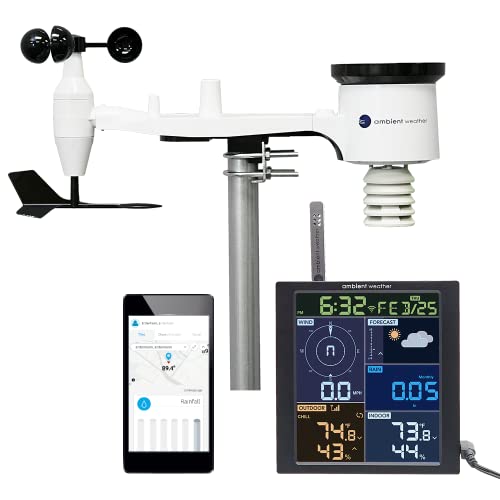
    The Ambient Weather WS-2902 is surprisingly feature-packed and accurate, given its price. Many of the cheap wireless home weather stations we’ve tested had issues that prevented us from genuinely recommending them. The WS-2902 does not. It isn’t as accurate as the WS-5000 or Davis weather stations, but it’s also less than half the price. The connectivity is a standout feature at its price point, with full smart-home capabilities thanks to IFTTT, Google Assistant, and Amazon Alexa support.

    Certain content that appears on this site comes from Amazon. This content is provided “as is” and is subject to change or removal at any time.

    There are many choices regarding home weather stations, especially for budget models. However, with these cheap weather stations came compromises, so I was skeptical of Ambient Weather’s claims about the WS-2902.

    (Editor’s note: We now recommend most consider the WS-1553-IP over the WS-2902. See our buyers’ guide for more information.)

    Ambient Weather claims the WS-2902’s sensors are nearly as accurate as the Davis Vantage Vue but have far superior smart home and connectivity features. It’s also half the price of the Vantage Vue, yet it’s still American-made (right here in Pennsylvania, no less).

    Such bold claims should be considered with skepticism, but they seem genuine. AmbientWeather.net, the cloud-based Internet portal for the WS-2902, is far superior to other web and app dashboards.

    Amazon Alexa and Google Assistant are supported, allowing you to ask for your station’s conditions by voice. IFTTT is also built in, and you can trigger other smart devices to do things based on the readings your station collects.

    For the most part, the WS-2902 lives up to the hype. While most sensors perform well, the Vantage Vue still has the advantage. The LCD console is pretty basic—one of the areas where Ambient Weather had to compromise to keep the station affordable—but it’s still better than the Vantage Vue and other stations twice its price. For the casual weather observer, the WS-2902 is perfect and, without question, one of the best budget personal weather stations available.

    Setting up the WS-2902

    Ws-2902c console

    The WS-2902 instrumentation includes all the basics, like indoor/outdoor temperature and humidity, wind speed and direction, barometric pressure, and rainfall. We were pleasantly surprised to find a UV and light (solar) sensor, which is usually only found on mid-grade and pro-level weather stations.

    Another highlight is the large 3-inch by 6.75-inch display console. In 2021, Ambient Weather redesigned the display to show the most commonly sought information, like temperature and rainfall, more prominently. It’s a welcome change, as the previous console had a narrow viewing angle.

    The WS-2902 sensor suite is an “all-in-one” sensor array, and installation is simple. The weather station ships primarily pre-assembled, with only the wind vane, anemometer cups, and the rain gauge funnel to attach. Install the batteries, put them on a mast, and you are up and running quickly.

    We love the directions—they’re written in a way that is easy to follow, which speeds the process along. Downloading the app helps you install the connectivity options, but you can also do it through the web-based portal.

    Once that’s all set up, you can view your station remotely through the app or the website. You can connect your WS-2902 to Amazon Alexa, Google Assistant, or IFTTT and share your data with Weather Underground.

    AmbientWeather.net now allows non-owners to access station weather data through its front page. The station is set to be public by default, but there is an option to make your data private.

    High-end features at a budget price

    WS-2902C UV and light sensors

    The WS-2902’s low price might lead you to expect a middle-of-the-road weather station, but it isn’t. Ambient Weather has packed a good deal of functionality into the WS-2902. The smart home capabilities work well, and the accuracy exceeded my expectations.

    The temperature, humidity, and wind readings matched my Davis Vantage Vue well. The rain gauge typically performed to our expectations, although it tends to overcount rainfall in downpours.

    We had one issue with the barometric pressure sensor, which seemed to react aggressively to fast pressure changes, requiring us to recalibrate it more often than we’d liked. Our experience appears unique, so this may have been a faulty sensor in our review unit.

    The WS-290C has a far longer update interval than Ambient’s higher-end WS-5000, at 16 seconds for outdoor sensors and just over a minute for indoor sensors. That’s relatively slow and might pose an issue in quickly changing weather conditions.

    But where Ambient Weather has not cut corners is in construction. Generally, it doesn’t appear any less well-constructed than more expensive stations. I’m surprised, to be truthful, considering most stations in the same price range as the WS-2902 look every bit the part of a cheap station.

    The radiation shielding that protects your thermometer/hygrometer from direct sunlight seemed to work better than my Vantage Vue in preventing false temperature spikes.

    Ambient Weather also includes a UV and light sensor in the WS-2902 sensor suite, which isn’t often found on stations of this price. The company allows a more considerable margin of error than Davis for its UV and solar radiation sensors with the Vantage Pro2, so I’m assuming they are lower quality.

    Ready for the smart home

    ambientweather.net graphs

    Ambient Weather’s stations report their data to AmbientWeather.net, the company’s cloud platform. You can access your data through the web portal or an app available for iOS and Android.

    IFTTT support makes this the cheapest full-featured weather station to support smart home connectivity. We used the data from the light sensors to control our lights during the evening and had no issues during the test.

    Amazon Alexa and Google Assistant support can also be activated, allowing you to ask your digital assistant to read your current conditions. For Alexa, say, “Alexa, ask Ambient Weather for the indoor/outdoor weather report,” or ask for weather information for a specific date. With Google Assistant, it’s similar. Say, “Hey Google, Ambient Weather indoor/outdoor weather report.”

    However, word of warning: Every measurement is reported back. For example, there’s no way to ask for specific information, like the day’s highs and lows or the daily rainfall.

    The WS-2902 is a budget favorite

    Having tested so many weather stations, it is rare to encounter a surprise like the WS-2902. Usually, price is the most significant factor in determining whether a weather station is good enough.

    The Ambient WS-2902 was the first to break the mold. In terms of accuracy, most of the sensors hold up against mid-range weather stations. The connectivity support is the best of any station we’ve tested, so Ambient stations score highly in that department.

    Of course, if you’re a discerning weather watcher, the accuracy isn’t there like with the WS-5000 or Davis’ Vantage Vue. But for the casual observer, this is the station to buy.

    We earn a commission when you buy through some links on this page. Cirrusly Weather is our sister store, owned by the same people as The Weather Station Experts. As an Amazon Associate I earn from qualifying purchases.

    Ambient Weather WS-2902

    Ambient Weather WS-2902

    4 / 5 Editorial rating

    The Ambient Weather WS-2902 is surprisingly feature-packed and accurate, given its price. Many of the cheap wireless home weather stations we’ve tested had issues that prevented us from genuinely recommending them. The WS-2902 does not. It isn’t as accurate as the WS-5000 or Davis weather stations, but it’s also less than half the price. The connectivity is a standout feature at its price point, with full smart-home capabilities thanks to IFTTT, Google Assistant, and Amazon Alexa support.

    Certain content that appears on this site comes from Amazon. This content is provided “as is” and is subject to change or removal at any time.

  • Which Ecowitt (Fine Offset) Weather Station Should I Buy?These six home weather stations are top sellers worldwide

    Which Ecowitt (Fine Offset) Weather Station Should I Buy?
    These six home weather stations are top sellers worldwide

    The US’s largest home weather station manufacturers are AcuRite, Ambient Weather, and Davis. However, buying one of these stations outside the United States is expensive. In the rest of the world, Ecowitt is the largest home weather station manufacturer globally. But like Ambient Weather, this company also licenses its designs from a company called Fine Offset, which explains why both companies have the same weather stations.

    We were shocked to find very little on the internet looking at the company’s home weather stations in detail — or Fine Offset for that matter — so we created this guide. Keep reading for an in-depth look at Ecowitt and Fine Offset.

    So Who Is Fine Offset Anyway?

    Fine Offset, or more specifically Shenzhen Fine Offset Electronics Co., Ltd., is a Chinese manufacturer “of weather-related products.” Founded in 2005, Fine Offset licenses its designs to other manufacturers. As of right now, the following companies are known to use Fine Offset designs:

    • Ecowitt (Fine Offset’s commercial brand)
    • Ambient Weather
    • Sainlogic (outside US)
    • Froggit (Europe)

    Please note that not all stations from these manufacturers are Fine Offset “clones.” Also, while the stations themselves may be similar in appearance, there are differences in operation and software from company to company.

    Ecowitt Weather Stations Currently Available

    Editors note: Since Ecowitt is available internationally and prices vary by market, we do not display prices to comply with Amazon policies. Clicking “Find the Best Deal” will take you to your correct local Amazon store. We’ve also listed where each model is available for sale for your convenience.

    Ecowitt Weather Stations

    We earn a commission when you buy through some links on this page. Cirrusly Weather is our sister store, owned by the same people as The Weather Station Experts. As an Amazon Associate I earn from qualifying purchases.

    1. 1

      Ecowitt Wittboy

      Ecowitt Wittboy

      4.3 / 5 Editorial rating

      The Wittboy is Ecowitt’s latest Wi-Fi weather station. It doesn’t have lightning detection or smart home capabilities (that we can tell), but it does pretty much everything else the Tempest does. The outdoor sensor contains a haptic rainfall sensor, light and UV sensors, an ultrasonic wind speed sensor, and temperature and humidity sensors. Ecowitt also includes its Wi-Fi hub, which allows you to send your data to Weather Underground.
    2. 2

      Ecowitt GW1203 Weather Station

      The Ecowitt GW1203 weather station combo includes GW1200 Wi-Fi IoT Gateway, WS85 Outdoor Sensor, and WN32 Outdoor Single-Channel Thermometer and Hygrometer Sensor. The nice thing about this package is the sonic anemometer, even though it is missing a rain gauge. What We Liked   What We Didn’t Like  

    Certain content that appears on this site comes from Amazon. This content is provided “as is” and is subject to change or removal at any time.

    Wrapping Up

    If you can’t afford to import a weather station from the States, Ecowitt weather stations are just as good, if not better. We’re big fans of their stations and highly recommend them if you’re in the market for a well-performing weather station. If you have any questions, feel free to ask them in the comments below.

  • Ambient Weather WS-1965 Review: Cheap, Accurate, But LimitedWeather for those on a budget

    Ambient Weather WS-1965 Review: Cheap, Accurate, But Limited
    Weather for those on a budget

    We earn a commission when you buy through some links on this page. Cirrusly Weather is our sister store, owned by the same people as The Weather Station Experts. As an Amazon Associate I earn from qualifying purchases.

    Certain content that appears on this site comes from Amazon. This content is provided “as is” and is subject to change or removal at any time.

    Ambient Weather has long been recognized for producing accurate weather stations that integrate well with smart home technology at competitive prices. The Ambient Weather WS-1965 is the company’s latest base model, designed to replace the WS-1900, which lacked internet connectivity. That was a real problem for the WS-1900, a cheaper AcuRite model that has had this issue for several years.

    The WS-1965 aims to compete with budget models from brands like Sainlogic and AcuRite, which offer internet connectivity at around the $100 mark. Despite some compromises in the sensor suite and console features, this model could be a viable option for entry-level weather enthusiasts.

    We were excited to test this station out as the sensor suite appears in several Ecowitt models, which are available internationally. But this review focuses on Ambient Weather and the WS-1965, so we’ll stay there.

    Weather station sensors mounted outside a building

    What’s Included

    In the box, you will find the sensor suite, mounting hardware, and a small screwdriver for attaching the wind gauge and anemometer. The console display is compact (approximately 4” x 4” and an inch thick) but remains bright and readable from a distance. Additional items include a manual, power cable, and plug for the console, along with four AA batteries (two for the console as backup power and two for the sensor suite).

    Installation Experience

    Setting up the WS-1965 is similar to other Ambient Weather stations. The sensor suite requires minimal assembly, and the included wire coil for the rain gauge is a thoughtful touch to prevent debris buildup. However, I encountered a loose screw within the sensor suite, a first for me with Ambient Weather products. Despite this, the sensor suite functioned correctly once assembled.

    The Wi-Fi setup process is less straightforward than other models, requiring a direct connection to the console to alter settings. This could pose challenges for those less technically inclined. Updating the console firmware is crucial to avoid issues with forecast accuracy. Ambient Weather’s manual provides detailed instructions to guide users through the process.

    Digital weather station display showing temperature and forecast.

    Performance and Accuracy

    The WS-1965 offers standard weather data, excluding UV and light sensors present in higher-end models like the WS-2902 and WS-5000. While these exclusions limit some smart home integrations, core functions such as indoor and outdoor temperature, humidity, wind speed, rainfall, and barometric pressure are well-supported.

    Comparing the WS-1965 to the KestrelMet 6000, I found temperature readings to be slightly cooler, with discrepancies of up to a degree during peak sunlight hours. This was unexpected, as non-aspirated sensors typically read warmer in direct sunlight. Humidity readings were accurate, though slightly higher in drier conditions. The rain gauge performed reliably, measuring 1.01” of rain compared to the KestrelMet’s 1.00”.

    The barometer, though not calibrated for this review, operated within an acceptable range, albeit with a slightly larger margin of error than preferred. For precise weather tracking, the WS-2902 remains a superior choice due to its enhanced sensor suite.

    Ambient Weather Network (AWN) Enhancements

    Ambient Weather has introduced a new fee-based tier to its AWN platform. The free level offers map layers, notifications, forecasts, and a one-year data history. The $50 annual subscription adds additional map layers, text alerts, a three-year data history, and extended forecasts up to 10 days, thanks to a partnership with Vaisala Weather. Despite this, AccuWeather map data is notably absent.

    The AWN platform’s data retention policy remains unclear. Unlike Davis, which retains user data beyond subscription periods, it is uncertain if AWN maintains weather data for more than a year without an active subscription. Sharing data with Weather Underground is a viable alternative for long-term data storage.

    Outdoor weather station equipment against blue sky

    Conclusion

    The Ambient Weather WS-1965 is a commendable entry-level weather station, albeit with some compromises in build and sensor quality. While it is preferable over similarly priced models from other brands, the WS-2902 remains the better choice for serious weather enthusiasts due to its superior accuracy and feature set. If budget permits, opting for the WS-2902 is advisable. In a pinch, the WS-1965 still outperforms other budget options.

  • 22 Great Weather Gifts on Sale Black FridayThe perfect gifts for the meteorologist in your life

    22 Great Weather Gifts on Sale Black Friday
    The perfect gifts for the meteorologist in your life

    The holiday shopping season is here, and there are some great deals on weather gifts. We’ve rounded up 22 (that’s not a typo!) gifts for weather lovers for you to consider for the weather nerd in your life this holiday season, no matter the holiday you’re shopping for, whether it be Christmas, Hannukah, Festivus, or whatever you celebrate!

    We have a cool gift for just about every type of weather geek on your list, but we know this list is pretty big. To help you out, we’ve organized this list into sections. You can use the menu below to skip around.

    Black Friday deals and holiday gift guide banner.

    Before You Shop

    Before diving into our deals, ensure you’re an Amazon Prime member! Some deals are Prime Exclusives, so joining now gets you a 30-day free trial required to take advantage of most deals, and you can cancel at any time!

    Not sure what to get? Let them pick. Amazon also offers Prime gift memberships for as little as $39. (We know from experience as weather geeks that you’ll buy much more once you start weather-watching!)

    Try Prime

    Weather Station Gift Ideas

    weather station in backyard

    Home weather stations are great gifts for someone who likes the weather. Your loved one can take daily observations and watch weather trends in their backyard. In our opinion, there are three great options to pick from here, with our personal favorite being the Ambient Weather WS-2902C. Here are our current picks.

    [affiliatable id=’259194′]

    The Ambient Weather WS-2902 is an excellent weather gift idea for those looking to monitor their backyard weather conditions. This home weather station is wireless with an easy-to-read LCD color display with a weather forecast icon that changes based on the weather data it tracks.

    The Ambient Weather WS-2902 includes:

    • Wind speed and direction
    • UV and solar radiation sensors
    • Temperature and humidity sensors
    • Barometer
    • Rain gauge

    [affiliatable id=’259951′]

    Compared to other home weather stations, the AcuRite Atlas provides easier access to weather information and monitoring from multiple devices simultaneously using My AcuRite software. The HD display is easy to read and shows weather information such as heat index, dew point, and even feels like temperature in real time.

    The Acurite Iris Professional Weather Station can measure:

    • Indoor and outdoor temperature
    • Humidity
    • Wind speed and direction
    • UV and light intensity
    • Barometric pressure
    • Rainfall

    [affiliatable id=’259024′]

    With almost zero maintenance, the Tempest Weather System is easy to install and operate, giving accurate local weather readings. This weather station is likely to go on sale and makes an excellent gift for weather enthusiasts who might find lightning detection a must-have.

    The Tempest Weather System can measure:

    • UV and solar radiation
    • Temperature
    • Humidity
    • Barometric pressure
    • Wind speed and direction
    • Lightning strikes
    • Rainfall through an innovative haptic rain gauge

    Handheld Weather Station Gift Ideas

    handheld weather station

    A handheld weather station is a must-have if they already have a home weather station. They range from simple to complex, but these three options are our favorites right now, and we know the weather geek in your life will love getting one as a gift this holiday. Unfortunately, sales are very rare on Kestrels, but we will highlight the best deals in our Gift Guide if we catch them!

    [affiliatable id=’259953′]

    Weather Book Gift Ideas

    woman sitting by the window reading a book

    Not everybody needs a home weather station. If they love to read, we’ve spotted a few good books on Amazon that we think are great gift options. (And while you’re at it, a Kindle Unlimited membership is an equally good choice).

    [affiliatable id=’259955′]

    Weather Radio/Emergency Radio Gift Ideas

    how to set noaa weather radio codes

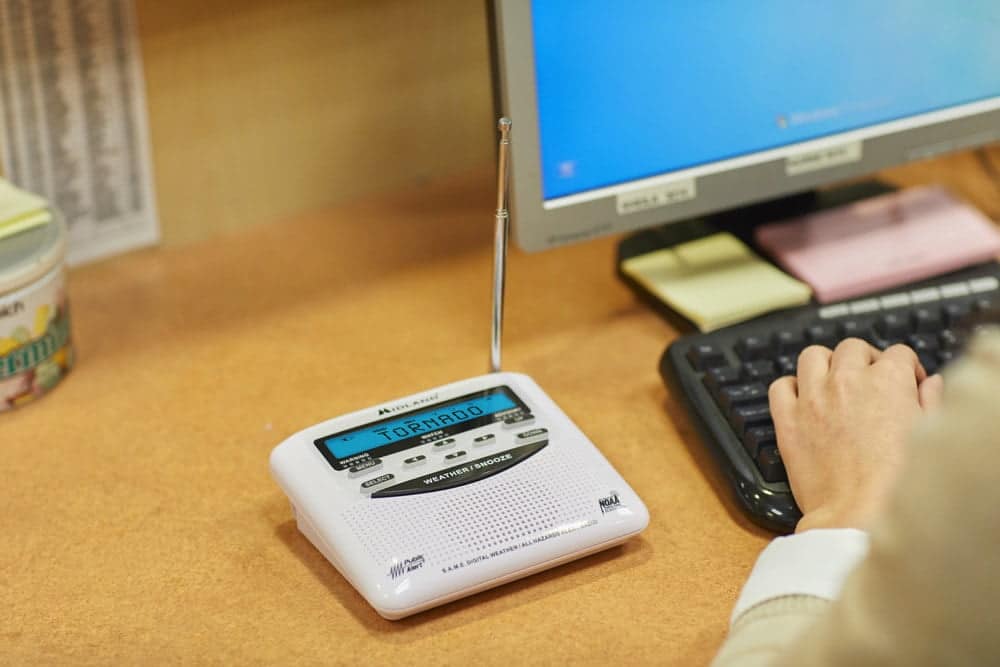
    A weather or emergency radio is one of the best gifts we can think of for weather lovers. The National Weather Service broadcasts weather information 24/7 on specialized frequencies, which you can use a weather radio or emergency radio to tune into.

    Emergency radios take it to the next level, able to power themselves through a hand crank or solar panel — perfect for when the power goes out.

    [affiliatable id=’257826′]

    Lightning Detector Gift Ideas

    talos lightning detector how does a lightning detector work

    Lightning detectors aren’t the most incredible weather-related gifts, but we’d argue it’s probably the one gift on this list that might save your life. Often lightning strikes well ahead of a thunderstorm, and in some situations, you might not even know a thunderstorm is on its way. Buying a lightning detector keeps the weather nerds you care about safe and sound, especially if they’re storm chasing.

    [affiliatable id=’258561′]

    Alert HD uses vibrate and audible warning alerts to alert you to nearby strikes, even if you can’t see them.

    Yet More Great Weather Gifts

    severe thunderstorm watch

    We’ve come to the end of our list of the best weather gifts, but we have a few more unique gift ideas that we think will make any weather enthusiast happy.

    [affiliatable id=’259956′]

    [affiliatable id=’259505′]

    [affiliatable id=’259493′]

    [affiliatable id=’259494′]

    [affiliatable id=’259375′]

    [affiliatable id=’259495′]

    Are you looking for more weather gift ideas? We’ve got you covered. Our main website, The Weather Station Experts, reviews dozens of weather gadgets! And keep checking back here, we’ll update this list regularly (and year-round) to help you find the perfect weather gift.

  • 5 Black Friday Weather Station Deals on AmazonSave money with these great buys on popular models

    5 Black Friday Weather Station Deals on Amazon
    Save money with these great buys on popular models

    Black Friday is an entire week this year on Amazon, giving shoppers an unprecedented opportunity to save for an extended period of time versus just one weekend.

    As you might have guessed from our name, we have tested quite a few weather stations (and own quite a few too)! So what are the best weather station deals this holiday? We’ve found a few good deals so far, and will add to this list throughout the sale!

    Before You Shop

    Before diving into our deals, ensure you’re an Amazon Prime member! Some deals are Prime Exclusives, so joining now gets you a 30-day free trial required to take advantage of most deals, and you can cancel at any time!

    Not sure what to get? Let them pick. Amazon also offers Prime gift memberships for as little as $39. (We know from experience as weather geeks that you’ll buy much more once you start weather-watching!)

    Try Prime

    The Best Black Friday Weather Station Deals

    For the first time in at least two years, the entire Ambient Weather line is on sale for Black Friday, including a rare deal on the WS-5000!

    [affiliatable id=’259195′]

    At $360, the WS-5000 is at the best price it’s been all year, and if you’ve been holding off because of the $450 price tag, now’s the time to scoop the WS-5000 up. This deal likely ends at midnight Cyber Monday (Pacific Time), so don’t wait.

    [affiliatable id=’257328′]

    The Ambient Weather WS-2000 is like a mix of the best of both the WS-2902 and WS-5000 in a more affordable package. The WS-2000 uses the WS-2902’s console but opts for the WS-5000’s console, which is a significant (and worthy) upgrade. The better console allows you to add optional sensors and view them on the console screen, something the WS-2902 cannot.

    The early sale on the WS-2000 knocks 20% off the price on Amazon, which is about average.

    [affiliatable id=’259194′]

    The Ambient Weather WS-2902 is also 20% off for Black Friday. This station is incredibly compact and includes all the main components of a professional weather station at a fraction of the price, with accurate readings that rival stations many times its price. Professional equipment can cost hundreds of dollars for one instrument, so this weather station is a great deal.

    If you are thinking about purchasing a beginner weather station that includes the basic weather monitoring instruments already pre-calibrated, this weather station is a great option.

    The Ambient Weather WS-2902 features the following:

    • Integrated indoor and outdoor hygrometer/thermometer (relative humidity and temperature)
    • Cup anemometer (wind speed)
    • Wind vane (wind direction)
    • Rain gauge
    • Solar radiation and light intensity
    • Barometer (barometric pressure)

    [affiliatable id=’259489′]

    If you’re a Prime member, you can grab the WS-1965 for just $109. And it has internet connectivity, too!

    [affiliatable id=’257291′]

    The WeatherFlow Tempest is also on sale, and shopping directly from WeatherFlow (which we recommend!) using promo code ‘HOLIDAYS20‘ gets this top wish listed station for just $271. The ship dates on the Tempest on Amazon do slip as we get closer to Black Friday (it’s one of their most popular selling models), so we recommend buying directly if possible (outside of the US, most places will need to use Amazon, WeatherFlow has previously told us).

    The WeatherFlow Tempest connects real-time weather data to a well-designed smartphone app. The Tempest includes more precipitation metrics than the other weather stations, including rain intensity, duration, and net accumulation. It even features a lightning detector, making it a better option for areas with frequent thunderstorms and severe weather.

    The Tempest weather station includes the following:

    • Reports of station pressure and sea level pressure
    • Pyranometer
    • Rain sensor (detects rain intensity, duration, and accumulation)
    • Ultrasonic wind sensor (measures wind direction and wind speed)
    • Lightning detector

    More weather station deals to come.. keep checking back

  • How much does an automatic weather station cost?

    How much does an automatic weather station cost?

    An automatic weather station is a broad term that describes weather stations that take measurements without humans. Basic home weather stations are automated, as are official weather stations, known as Automated Surface Observing Systems (ASOS) in the United States. An automatic weather station can range in price from as little as $100 to tens of thousands of dollars for commercial equipment.

    However, in most residential and commercial applications, the average price is between $300 and $2,000 USD depending on the station purchase, any specialized sensors, and mounting.

    Average Weather Station Cost By Application

    A casual weather watcher won’t need the station that a farmer would. In other words, determine your primary need for a weather station and go from there.

    Casual weather watcher

    If you just want to be able to know what’s going on outside before stepping out the door, or if your garden’s getting enough water, we recommend a basic station like the Ambient Weather WS-2902. For under $200, you’re getting a fully featured weather station that we’ve found to be super reliable. If you don’t need the solar and UV sensors, you can step down to the WS-1965, but for $50 more the WS-2902 is far more accurate.

    Average cost: $100-$200 USD

    Weather enthusiast

    Consider yourself a “weather weenie?” Or just want a more dependable station overall? While the WS-2902 might be fine, we’d also suggest you check out the Davis Vantage Vue, Tempest Weather System, or the Ambient Weather WS-5000. Each of these stations has both its strengths and weaknesses, but are a step above the previous recommendations.

    Average cost: $300-$600 USD

    We earn a commission when you buy through some links on this page. Cirrusly Weather is our sister store, owned by the same people as The Weather Station Experts.

    Tempest Weather System

    Tempest Weather System

    4.5 / 5 Editorial rating

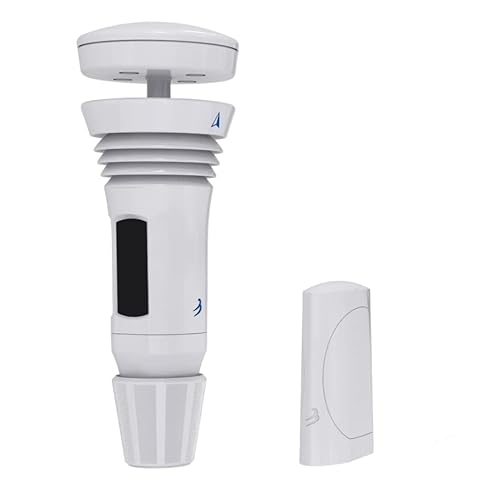
    WeatherFlow is a relatively recent entrant to the home weather station market, although it has years of experience. Its coastal network of stations has been delivering vital information to meteorologists for years and has proven useful (and durable) in landfalling hurricanes. The Tempest is WeatherFlow’s first attempt at a home weather station. For the most part, it’s a good start. It’s the only one of our stations with built-in lightning detection, one of Tempest’s standout features, and operates entirely on solar power. We found that the real-time lightning data matched better with data from professional lightning detection networks. It regularly detected distant lightning faster than any other station we’ve tested.

    Gardening & Farming

    If you’re in need of weather data for agricultural purposes, we highly recommend stations on the high end for their accuracy and expandability. Stations like the WS-5000, Davis Vantage Pro2, or KestrelMet 6000 are stations to investigate. All three offer optional soil and leaf moisture sensors and UV and light data. However, you will pay considerably more.

    Average cost: $500-$1,500 USD

    We earn a commission when you buy through some links on this page. Cirrusly Weather is our sister store, owned by the same people as The Weather Station Experts. As an Amazon Associate I earn from qualifying purchases.

    The Best Ambient Weather Station

    Ambient Weather WS-5000

    Ambient Weather WS-5000

    4.4 / 5 Editorial rating

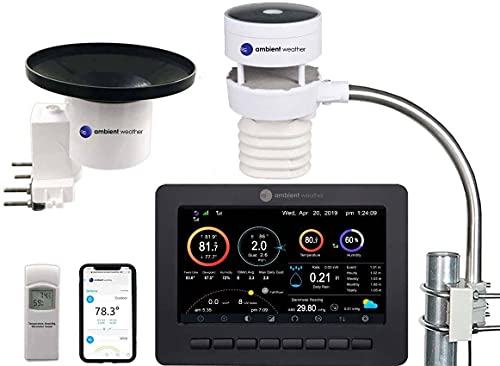
    The WS-5000 features a redesigned sensor suite, including an ultrasonic anemometer. Eliminating the cup anemometer found on other weather stations drastically reduces the number of moving parts and can measure wind speed as accurately as the cup-and-vane. This should extend its useable life as the traditional anemometer requires ongoing maintenance to ensure trouble-free use.

    Certain content that appears on this site comes from Amazon. This content is provided “as is” and is subject to change or removal at any time.

    Educational Applications

    We’d recommend the KestrelMet 6000 or Davis Vantage Pro2 for educational uses. Our reasoning here is accuracy. While the KestrelMet 6000 comes with far aspiration, the Vantage Pro2 base model does not so make sure you select the correct model.

    Average cost: $1,000-$2,000 USD

    We earn a commission when you buy through some links on this page. Cirrusly Weather is our sister store, owned by the same people as The Weather Station Experts. As an Amazon Associate I earn from qualifying purchases.

    Davis Vantage Pro2

    Davis Vantage Pro2

    4.2 / 5 Editorial rating

    The Davis Vantage Pro2 is one of the best high-end wireless home weather stations you can buy and is made even better by WeatherLink Live or the WeatherLink Console. The Vantage Pro2 is a proven workhorse. Several years ago in the Caribbean, a VantagePro 2 recorded a 199mph wind gust in a hurricane before its mast snapped. That’s the highest wind reading ever recorded on a home weather station!

    Certain content that appears on this site comes from Amazon. This content is provided “as is” and is subject to change or removal at any time.

    Commercial Applications

    If weather data at a job site or location is important, we’d recommend either the Davis Vantage Pro2 or KestrelMet 6000. Both offer optional cellular connectivity, which allows you to monitor weather conditions even offsite. The Tempest also has a commercial version known as the TempestOne. The cost varies widely based on the business’s unique needs.

    Average cost: $1,000-$2,500 USD+

    While these are only a few examples, we hopes this helps you narrow down your search to the best automatic weather station for your particular need. Have any questions? Feel free to comment below!

  • Weather Station Maintenance Guide: Ensure Accurate DataFollow this easy guide to keep your weather station operating optimally

    Weather Station Maintenance Guide: Ensure Accurate Data
    Follow this easy guide to keep your weather station operating optimally

    You can ensure accurate data and enjoy many years of trouble-free use from your weather station by regularly performing weather station maintenance

    Whether you own a top-of-the-line Davis Vantage Pro 2 or a more affordable station from AcuRite, Ambient Weather, or other brands, these maintenance tips and instructions will help you extend the life of your station. Best of all, it won’t take you more than 30 minutes to complete in most cases.

    How often should I do weather station maintenance?

    We recommend that you perform weather station maintenance at least once per season. This is especially important in the fall and winter, as those are the hardest months on your equipment. Depending on weather conditions and the surrounding environment, some may need to perform maintenance as frequently as every month.

    How long should a weather station last?

    Weather stations are designed to last for a considerable amount of time. On average, a weather station can be expected to have a lifespan of around 10 to 20 years. This is because weather stations are typically made with durable materials that can withstand various weather conditions and environmental factors.

    The longevity of a weather station largely depends on its quality, maintenance, and usage. Higher-quality weather stations that are well-made and properly maintained are more likely to last longer than lower-quality ones. Regular maintenance, including cleaning, calibration, and replacement of worn-out parts, can also help extend the lifespan of a weather station.

    In addition, the way a weather station is used can impact its lifespan. Weather stations that are frequently exposed to harsh weather conditions or extreme temperatures may experience faster wear and tear. Similarly, weather stations that are used in research or industrial settings where they undergo extensive monitoring and data collection may have a shorter lifespan compared to those used for personal or recreational purposes.

    Ultimately, the lifespan of a weather station can vary depending on multiple factors. It is important to regularly assess the condition of the weather station and consider any necessary repairs or replacements to ensure accurate and reliable weather data for as long as possible.

    What tools do I need?

    No specialized tools are necessary for weather station maintenance; you’ll find many of these around your house. If you’re following our suggestions, here are the tools you’ll need:

    • Philips and flathead screwdrivers
    • A soft brush (a toothbrush is best!)
    • A mild soap, like Dawn, etc.
    • Warm water
    • A small soft towel
    • New lithium batteries for the sensor suite

    Got a Davis station?

    There are weather station maintenance kits available. You do not need to perform this maintenance every time, but we’d recommend purchasing either the Vantage Vue or Vantage Pro2 Tune-Up Kits every few years to keep your station components in working order.

    First things first: disconnect your weather station

    Before performing any maintenance, you will want to disconnect your weather station. The easiest way is to remove the sensor suite’s batteries and disconnect your console. This step will prevent erroneous readings caused by the weather station maintenance process. Rarely will maintenance take more than 30 minutes, and we recommend late morning or early afternoon on a clear day so you still capture the day’s maximum and minimum temperatures correctly.

    Recalibrate inaccurate sensors

    Digital sensors do wear out over time, which may require recalibration to ensure accuracy. After their initial setup, many stations require little recalibration, but lower-quality weather stations will likely need to be recalibrated at some point.

    The instruments most likely to require recalibration are the thermometer/hygrometer, the barometer, and the rainfall sensors. For specific calibration steps, refer to your instruction manual. While the official way to recalibrate involves using an “analog” instrument, most of us can’t.

    Your next best bet is to use a nearby NWS reporting station to make your adjustments, and if there is none nearby, use other personal weather stations as a last resort.

    Recalibration should be performed as needed, even between regular maintenance cycles. However, if you’re doing it during maintenance, give your sensors an hour or two to acclimate themselves.

    weather station maintenance vantage pro2

    Check your siting for issues

    Make inspections of your weather station’s siting (the mount and positioning) is still optimal. Check for the following:

    • Survey the area for new obstructions, and if need be, move your weather station using these guidelines.
    • Ensure that your station, especially the rain gauge, is still level.
    • Check that your solar panel still has a clear view of the sky.
    • Check the mount and mast for any signs of deterioration. Check the screws and attachments and ensure the sensor suite is still securely attached to the mast.

    Weather station maintenance tips for individual sensors

    Looking for weather station maintenance tips for a specific sensor? Below we’ve listed the best methods for you to clean each of the sensors.

    Temperature and Humidity Sensors

    Dirt and debris can accumulate on the radiation shielding. We’ve also had insects crawl inside the shielding and build a nest around the sensor. Take apart the radiation shielding, wipe it down with a damp cloth, and let the sensor air dry.

    Inspect the sensor itself. Gently brush the sensor with a soft brush to remove any debris. We do not recommend using water to clean the sensor.

    Anemometer/Wind Vane

    For weather stations that use a cup and vane system to measure wind direction and speed, use this section (if you have a sonic anemometer, you can skip ahead). Ensure that the cups spin and the vane moves freely. If not, detach these and clean the bearings and area around where the cup and vanes are attached. It is okay to use mild soap and warm water for tougher grime.

    If the problem persists, you may need to adjust the set screw. Refer to your owner’s manual for instructions on this process.

    Sonic Anemometers

    For sonic anemometers, you must keep the space through the sensor clean. Debris, ice, and snow will all cause issues with readings and must be cleared. If necessary, clear this debris and use mild soap and warm water to remove tough spots.

    Rain Gauge

    Most personal weather stations use a “tipping bucket” to measure rainfall. The mechanism is covered by a funnel, which directs falling rain into the tipping buckets. These funnels can quickly become clogged by dirt, debris, and even bird droppings. Remove the funnel and clean it thoroughly. While the funnel is removed, also inspect the tripping buckets inside. Ensure that these are also clean and free of debris.

    If you are having a serious issue with bird droppings, installing some deterrent around the rim of the funnel to prevent them from landing on it may help to alleviate the problem (The Davis Vantage Pro2 comes with this from the factory – see the video). Remember that you may create false readings while cleaning the rain gauge. You can typically readjust this by deleting the false data. Refer to your user manual for specific directions.

    Solar Panel/Batteries

    Your instrument unit’s solar panel provides the power to send your readings back to your console and needs to be clean to generate sufficient power. Ensure these are as clean as possible by wiping them with a damp cloth.

    While cleaning your solar panels, it’s also an excellent time to change the backup batteries. Most station owners will get away with only changing these once a year. If you’re in an area that experiences long periods of darkness during the winter (near and above 60° north and south latitude), you may need to change the batteries several times.

    Always use Lithium batteries. This battery performs far better in cold climates and powers your station longer, saving you money on replacement costs. Standard alkaline batteries will lose power quicker in cold weather and freeze and fail when temperatures fall below -4°F. When the batteries warm up again, they’ll start working, but repeated freezing/unfreezing will drastically shorten their overall life.

    Additional Sensors

    Additional specialized weather sensors like a UV sensor or solar radiation sensor will have specific maintenance instructions. Refer to your user manual to prevent any damage.

    Remember, regular weather station maintenance is key to a long useful life!

  • 5 Weather Station Mounting IdeasMounting your weather station correctly improves accuracy dramatically

    5 Weather Station Mounting Ideas
    Mounting your weather station correctly improves accuracy dramatically

    Congratulations on your weather station purchase! Now comes the (sometimes) hard part: finding a spot to install your station. You want your readings to be as accurate as possible. We’ve written this blog with some weather station mounting ideas for you to consider.

    Siting tips

    There are standards for how weather observations are taken. This is done so that the data is standardized, making comparisons possible and ensuring accurate readings. The National Weather Service’s Cooperative Weather Observer Program (CWOP) is a good standard for personal weather stations regarding weather station sensor placement.

    • The temperature sensor must be placed on level ground, away from paved surfaces and other artificial heat sources. The sensor should be at ‘eye level,’ about five to six feet above the ground.
    • The anemometer should be mounted at a height of 33 feet above the ground and at a distance of 10 times the height of any nearby obstructions. This is often the hardest standard to meet in a home weather station, so if mounted on a roof, it should be at least six to ten feet above the roofline.
    • The rain gauge should be mounted 4-6’ above the ground, according to the CWOP, and at a distance of at least four times the height of any nearby obstructions.

    Popular Weather Station Mounting Options

    We earn a commission when you buy through some links on this page. Cirrusly Weather is our sister store, owned by the same people as The Weather Station Experts. As an Amazon Associate I earn from qualifying purchases.

    Scroll horizontally to compare all products.

    Certain content that appears on this site comes from Amazon. This content is provided “as is” and is subject to change or removal at any time.

    Where should I put my weather station?

    We recommend surveying your yard before purchasing for an optimal location to place your weather station. Note the locations of tall objects such as trees, buildings, and other obstructions. Ideally, you’re looking for a spot with as much distance in all directions from any other objects.

    Now, look up. How tall are the nearest obstructions? Are power or other transmission lines above you? You want to avoid the latter if you plan to use a mast and mount.

    Do I need to buy a mount for my weather station, or can I make my own?

    Mounts are relatively inexpensive and simple to install. However, making a mount out of 1 1/4″ PVC piping is easy if you’re handy. Attach the PVC securely to a fencepost or 4×4 driven into the ground.

    This will work well for basic weather station installation. However, those looking for a long-term solution should opt for a metal mount and mast instead, as long PVC pieces will not be stable in windy conditions.

    Which mount brands are the best? Ambient Weather is our favorite

    TV antenna mounts will work as a mount for your weather station installation. Amazon’s top choice here is the inexpensive Matis Universal J Pipe Mount. We like the adjustability, as it allows for mounting on angled and flat surfaces. However, it is only .8″ in diameter — making it too small for mounting most weather stations, which require a larger diameter pipe — typically 1.25-1.5″.

    Others swear by mounts from Antennas Direct. The company’s mounts are some of the highest-rated on Amazon and have a wide selection of mount types.

    A company produces mounts specifically for weather station installations, and that’s Ambient Weather. This makes installation easier, as you know you’ll have the right size (and sturdy enough) mount for the job.

    While we recommend either TV mount brands above, we find the Ambient Weather mounts exceptional. Our test mounts are the company’s; they’ve held up well over the past three years we’ve owned them.

    The Best Weather Station Mounting Ideas

    There are dozens of options out there, but these five stand out.

    Best Overall Mount – Ambient Weather EZ-48 Weather Station Tripod and Mast Assembly

    The Ambient Weather EZ-48 is the mount and mast system we use here at The Weather Station Experts. You can mount it to any level surface (such as a flat roof) or use Ambient Weather’s stake kit for ground mounting.

    We’ve been able to use our EZ-48 with two additional EZ-125-35M extensions with only minimal sway without guy wires; however, the company recommends you secure the mast with guy wires if you use any more than one extension.

    Best Budget Mount – Matis Universal J Pipe Adjustable Mount

    If you have a weather station that uses U-bolts to secure itself to a mast or is mounted atop smaller diameter poles, then the Matis Universal J Pipe Mount is the best choice for those on a budget.

    This mount is best for situations where you must place the mounting surface on an angle. However, we wouldn’t recommend this mount for bulkier weather stations like the Vantage Pro2. We’d also guess this particular mount won’t last very long in the elements. You do get what you pay for.

    Best Side Mount – Ambient Weather EZ-30-12 Stable Gable Mounting Kit with Mast

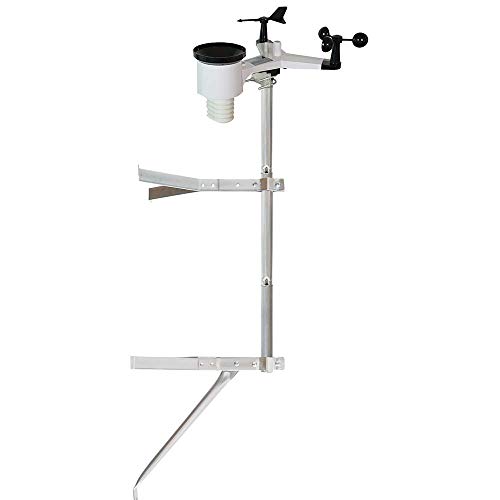
    If you’re mounting your weather station to a wall, we’d recommend the EZ-30-12 Stable Gable Mounting Kit with Mast. This mount is handy in windy locations as the mast is secured in two places to the wall.

    You can add additional gable mounts for increased stability if necessary and additional EZ-125-35M extensions as needed. Here, we wouldn’t recommend using more than one extension, or the mast will sway.

    We earn a commission when you buy through some links on this page. Cirrusly Weather is our sister store, owned by the same people as The Weather Station Experts. As an Amazon Associate I earn from qualifying purchases.

    Certain content that appears on this site comes from Amazon. This content is provided “as is” and is subject to change or removal at any time.

    Best Chimney Mount – Ambient Weather EZ-29-24 Chimney Mounting Kit with Mast

    Your chimney can act like a mast itself and is the highest point in your house. Use the EZ-29-24 Chimney Mounting Kit in these situations. Instead of drilling holes into the brick, long straps are included that wrap around your chimney,

    This provides a highly stable mounting surface for your mast, where the weather station is placed. We only recommend this option if you don’t use your fireplace or sealed the chimney.

    We earn a commission when you buy through some links on this page. Cirrusly Weather is our sister store, owned by the same people as The Weather Station Experts. As an Amazon Associate I earn from qualifying purchases.

    Certain content that appears on this site comes from Amazon. This content is provided “as is” and is subject to change or removal at any time.

    Best Mast-to-Mast Mount – Ambient Weather EZ-HD-PTP Heavy Duty Mast-to-Mast Mounting Kit

    If you have a small flagpole or another circular mast in your yard, you can install it with your weather station using the Ambient Weather EZ-HD-PTP Mast to Mast Mounting kit. This mount works with poles of up to three or so inches.

    While Ambient Weather has a cheaper version of these clamps, opt for the heavy-duty versions instead. From what we can gather, these clamps last longer and provide a more secure mount, mainly when used in pairs.

    Quick note: Many weather station installation solutions can support extensions. If you plan to use more than one extension pole, we recommend securing the pole with guy wires to ensure stability during windy conditions.

    We earn a commission when you buy through some links on this page. Cirrusly Weather is our sister store, owned by the same people as The Weather Station Experts. As an Amazon Associate I earn from qualifying purchases.

    Certain content that appears on this site comes from Amazon. This content is provided “as is” and is subject to change or removal at any time.

  • Buying a Cheap Weather Station?You'll want to read this before you do. There are better (and cheap) options

    Buying a Cheap Weather Station?
    You’ll want to read this before you do. There are better (and cheap) options

    Weather-watching is a fascinating hobby, but it’s certainly not cheap. Most weather stations can easily run into the hundreds of dollars (the Davis Vantage Pro2 is a great example) — which prices out a significant number of us. A cheap weather station is probably your best bet if budget concerns you.

    Cheap doesn’t necessarily need to mean lower quality. While the best home weather stations are pricey, there are several models below $200 that we’re happy to give our recommendation on. Our favorite is the Ambient Weather WS-2902, but three other cheap weather stations are nearly as good.

    What cheap weather station should I buy?

    We’ve noticed a lot of new cheap weather station brands on Amazon as of late. However, we recommend you stick with popular and well-known brands. Among cheap weather stations, Ambient Weather is the brand that we recommend most. Even though the company’s stations are among some of the cheapest on Amazon, they’re feature-packed and surprisingly accurate for the price.

    However, there are stations from AcuRite and La Crosse Technology that are worth considering. We’ve included two below that caught our eye. As for the other budget weather station brands on Amazon — Logia, Sainlogic, and others — we’d recommend steering away from those for now.

    We’ve yet to test most of these brands, so we can not speak from personal experience. However, from reading the reviews, many of these brands suffer from some issues, whether it be poor support, troublesome installs, or in some cases, poor construction and reliability.

    As they say, buyer beware. But we’re here to try and guide you toward the best options.

    What’s the best budget weather station?

    We’re big fans of Ambient Weather, and the WS-2902 is the best cheap weather station by a considerable margin, in our opinion.

    The Ambient Weather WS-2902’s price might stretch the definition of “cheap” a bit, but compared to most other stations, it’s an absolute bargain for what you get, and reviews of the station (including our own) are generally very positive.

    The WS-2902 isn’t as accurate as the WS-5000 or Davis weather stations, but it comes close. The connectivity is a standout feature at its price point, with full smart-home capabilities thanks to IFTTT, Google Assistant, and Amazon Alexa support.

    Like the WS-5000, connecting the station to AmbientWeather.net allows you to share your data with Weather Underground and access your station data through the app or a web-based portal. The LCD console in the WS-2902 is much improved over previous models. When we tested the WS-2902A, the console suffered from readability problems beyond a 30-degree angle. That issue is far less of a problem here.

    If you can’t justify the price of most weather stations, the WS-2902 is your best bet in cheap weather stations.

    Some Buying Tips

    If you’re planning to save some money by going with a “cheap weather station,” we recommend going with the best weather station you can afford. That will differ for everyone, so the above recommendations are a great start. Prioritize accuracy over functionality when looking at budget weather stations. Even on the low end, you’ll be spending more than $100, and we find the most common complaints from weather station owners are accuracy-related more than anything.

    Another thing to check when shopping for a cheap weather station is the reviews. Look for “verified purchase” by Amazon reviews. Some companies are known to flood their product listings with fake positive reviews. You can avoid that by reading through those verified reviews to ensure you’re purchasing a good product.

    Wrapping Up

    If you own any of these “cheap” weather stations or have others you’d like to see us add to this list, we’d love to hear from you in the comments about your experiences.