

- 1
La Crosse Technology C85845-INT Weather Station
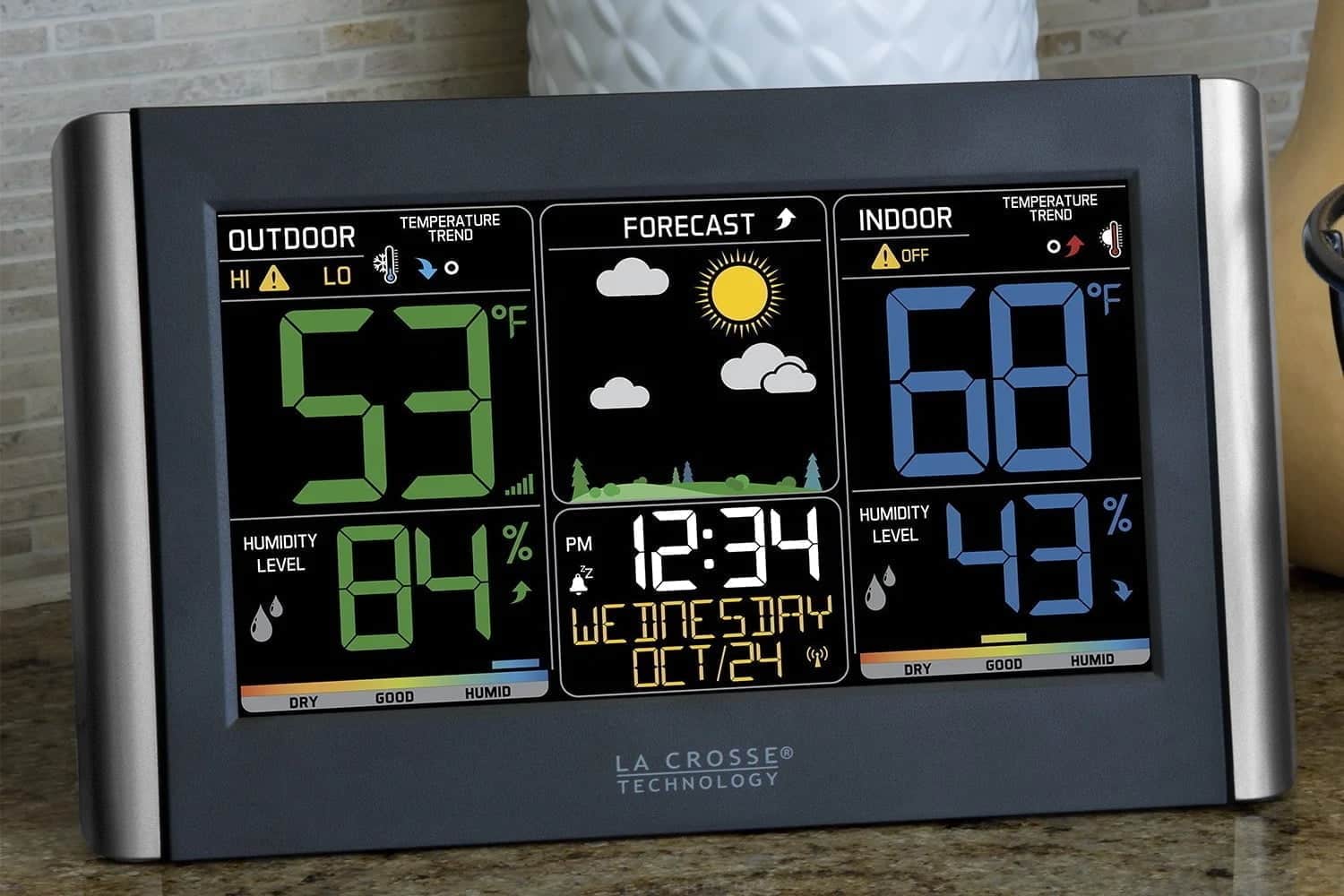
 While we generally don’t recommend this brand as there are better options, one thing La Crosse Technology does well is indoor and outdoor thermometers. One of the best indoor-outdoor thermometers is the C85845-INT, which features an adjustable brightness color display and an attractive console that doesn’t take up much space and the temperature is readable from a considerable distance. In addition to indoor and outdoor temperature and humidity, this large display indoor outdoor thermometer also measures the dewpoint and heat index, and “comfort levels” are shown below the humidity readings. While the C85845-INT does measure barometric pressure to provide a forecast, that information isn’t shown. The console runs off AC power, with 3 AA batteries as backup (the outdoor sensor also requires batteries).
What we like
- Large, bright display
- Battery backup
Keep in mind
- Accuracy isn’t great without optional radiation shield for the outdoor sensor
- 2
Maximum Criterion Thermometer
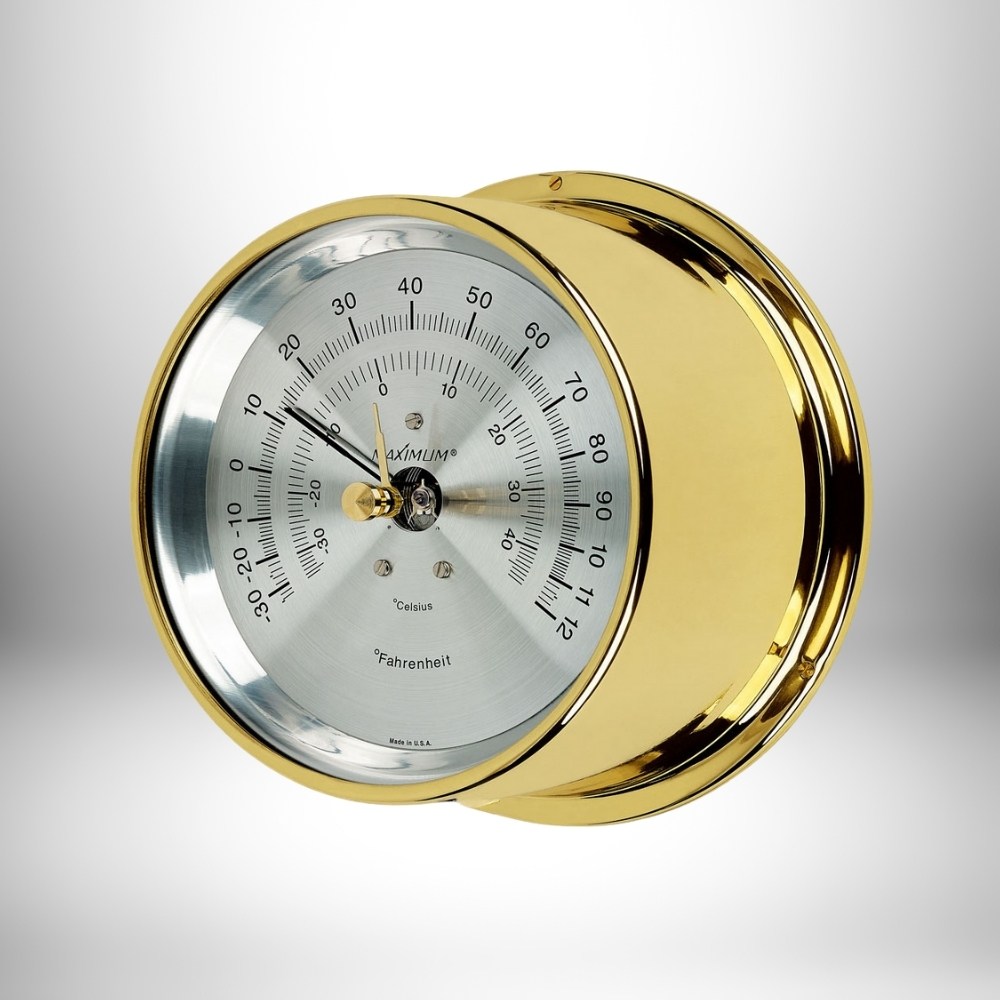 While the Criterion is an expensive indoor-outdoor thermometer, we wholeheartedly recommend it thanks to its high-quality construction and outstanding accuracy. You can monitor the temperature in up to three locations, with an adjustable marker to mark the current temperature to watch for trends. The Criterion is a great first Maximum instrument, and once you see how good it looks (and works), we think it won’t be your last.
 - 3
ThermoPro TP62 Digital Wireless Hygrometer
If budget is a big concern for you, look no further than the ThermoPro TP62. It is the cheapest recommendation on our list and gets great reviews, and unlike some cheaper models has a backlit display. While this package includes just a single sensor, you can add up to two more sensors. The console is small and compact. However, it features a large LCD readout, making it easy to view from a distance. Accuracy suffers a bit and it’s nowhere near as accurate as our other recommendations (accuracy issues were the most common poor review). But if you are looking for a low-cost alternative, this is the most popular and best-reviewed budget WiFi temperature sensor. However, like anything cheap, you do get what you pay for.

We may earn a commission when you purchase through links in this article. As an Amazon Associate I earn from qualifying purchases.
Certain content that appears on this site comes from Amazon. This content is provided “as is” and is subject to change or removal at any time.
Not everyone needs a full-fledged weather station. An outdoor thermometer is ideal if your primary concern is measuring the temperature. With so many options available, the question arises: Which are the best outdoor thermometers on the market?
To answer that, we’ve curated this guide featuring the best indoor-outdoor thermometers across various price ranges—from budget-friendly $20 options to premium models costing up to $400. While La Crosse Technology leads the pack in our recommendations, several other brands offer compelling alternatives.
After an exhaustive review of the top indoor-outdoor thermometers, we’ve concluded that the La Crosse C85845-INT stands out for its exceptional performance. However, others deserve honorable mention for their unique features, such as the ability to monitor multiple locations simultaneously, all without breaking the bank.
Best Indoor Outdoor Thermometers
We may earn a commission when you purchase through links in this article. As an Amazon Associate I earn from qualifying purchases.
- 1
La Crosse Technology C85845-INT Weather Station
While we generally don’t recommend this brand as there are better options, one thing La Crosse Technology does well is indoor and outdoor thermometers. One of the best indoor-outdoor thermometers is the C85845-INT, which features an adjustable brightness color display and an attractive console that doesn’t take up much space and the temperature is readable from a considerable distance. In addition to indoor and outdoor temperature and humidity, this large display indoor outdoor thermometer also measures the dewpoint and heat index, and “comfort levels” are shown below the humidity readings. While the C85845-INT does measure barometric pressure to provide a forecast, that information isn’t shown. The console runs off AC power, with 3 AA batteries as backup (the outdoor sensor also requires batteries).What we like
- Large, bright display
- Battery backup
Keep in mind
- Accuracy isn’t great without optional radiation shield for the outdoor sensor
- 2
Ambient Weather WS-10 Wireless Indoor/Outdoor 8-Channel Thermo-Hygrometer
While the La Crosse C85845 is nice, it can only measure the temperature inside and outside at one location of your choice. That’s not the case with the Ambient Weather WS-10. The large display allows you to monitor the current temperature and relative humidity in up to eight locations, four at any given time (one sensor is inside the console, and you can add up to seven more wireless sensors). You can also use the Ambient Weather F007TP probe sensor to monitor your pool’s temperature. While there is no built-in wireless connectivity to store data (max/min records are stored on the console), we think the WS-10 is a steal, and the battery life of the sensors should provide up to a year of continuous operation. - 3
ThermoPro TP62 Digital Wireless Hygrometer
If budget is a big concern for you, look no further than the ThermoPro TP62. It is the cheapest recommendation on our list and gets great reviews, and unlike some cheaper models has a backlit display. While this package includes just a single sensor, you can add up to two more sensors. The console is small and compact. However, it features a large LCD readout, making it easy to view from a distance. Accuracy suffers a bit and it’s nowhere near as accurate as our other recommendations (accuracy issues were the most common poor review). But if you are looking for a low-cost alternative, this is the most popular and best-reviewed budget WiFi temperature sensor. However, like anything cheap, you do get what you pay for. - 4
La Crosse 308-1414MB-INT Weather Station with Mold Indicator
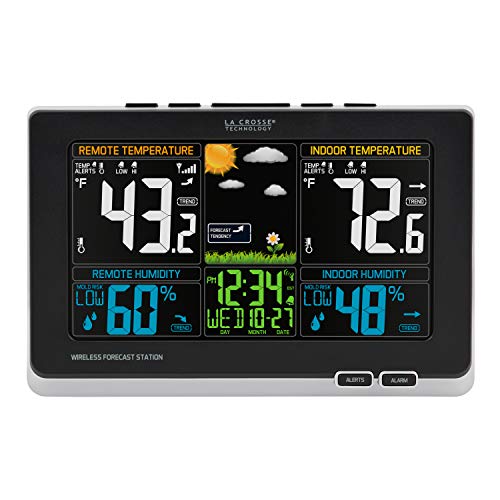 If you have a mold problem, the La Crosse 308-1414MB-INT is a good choice. If you live in a damp home, you’re probably all too familiar with mold. It thrives in cool and humid environments, so it’s crucial to where mold is most likely to grow. The La Crosse 308-1414MB-INT monitors these conditions and will sound an alert if it believes there is a high risk of mold growth. Otherwise, the feature set is similar to the C85845-INT, our top pick. If you don’t have mold issues, that might be the better option (the good news is they’re often priced about the same on Amazon if you don’t know which one to choose!).
 - 5
AcuRite Notos (3-in-1) Weather Station
If you’d like something a little more than just a indoor-outdoor thermometer, the AcuRite Notos is technically a weather station, although it doesn’t measure rainfall.


Certain content that appears on this site comes from Amazon. This content is provided “as is” and is subject to change or removal at any time.
Also Consider
We may earn a commission when you purchase through links in this article.
Tempest Weather System
What are some features to look for in an outdoor thermometer?
What’s the weather like outside? You can find it with an outdoor thermometer. These days, there are many options, both in analog and digital thermometers. Here’s what we think are the essential features.
Analog vs. Digital
First, consider whether you prefer an analog or digital model.
Best Analog Thermometers
We may earn a commission when you purchase through links in this article. As an Amazon Associate I earn from qualifying purchases.
- 1
Taylor Max/Min Grove Park Analog Thermometer
Indoor and outdoor temperature readings from inside with maximum and minimum temperature. - 2
Taylor Precision Indoor/Outdoor Thermometer/Hygrometer
Measure temperature and humidity indoors and out with this inexpensive yet accurate analog thermometer.


Certain content that appears on this site comes from Amazon. This content is provided “as is” and is subject to change or removal at any time.
Modern digital thermometers are as accurate and often more convenient than analog outdoor thermometers. You don’t have to worry about an attached cable; the sensor and console can be placed anywhere you have space.
Either way, you’ll want to keep the temperature sensor out of direct sunlight to ensure accurate readings. Some outdoor thermometers offer additional functionality, such as an atomic clock, barometer and humidity readings, and a short-term forecast. Calibration isn’t necessary with a thermometer, although you’ll want to acclimate it to the air around it before taking any readings.
This process may take as little as 30 minutes, but if there’s a significant temperature difference, the thermometer may take up to an hour to be accurate.
Display
Most digital indoor outdoor thermometers have large displays, which make them easier to view from a distance than an analog thermometer. We prefer LCDs with a black background, which gives the numbers more contrast and, thus, more readability.
Transmission Range
Generally, you can place your remote temperature sensor up to 200-300 feet from your console without an issue. This is different with analog models, which typically only provide a short cord for the attached outside sensor (Maximum is different here, they provide 60′ of cable — most don’t).
Battery Life
The indoor-outdoor thermometer’s console will likely require a power outlet, but the sensors require ‘AA’ or ‘AAA’ batteries. Most sensors will last about a year on the same battery, but in colder climates, you may need to replace the batteries as often as every six months.
Wrapping Up
We hope you’ve found our guide to the best outdoor thermometers helpful. As a reminder, our current recommendation is the La Crosse Technology C85845, but for multiple locations, you can’t beat the Ambient Weather WS-10.
If you’d like to read more of our weather gadget reviews, we recommend checking out the Best Hygrometers if you’re concerned about humidity levels in your home and our weather station reviews. Have any questions? Feel free to ask!