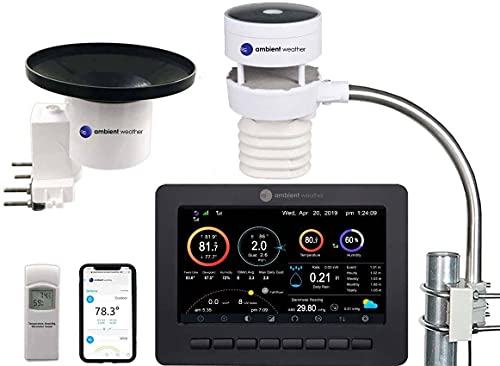
Tag: Weather Stations

We’re called The Weather Station Experts for a reason. Read all of our blog posts, reviews, and advice on weather stations here.

  • Davis Vantage Pro2 ReviewIt may be over a decade old, but it's still the best by a mile

    Davis Vantage Pro2 Review
    It may be over a decade old, but it’s still the best by a mile

    We earn a commission when you buy through some links on this page. Cirrusly Weather is our sister store, owned by the same people as The Weather Station Experts. As an Amazon Associate I earn from qualifying purchases.

    Davis Vantage Pro2

    Davis Vantage Pro2

    4.2 / 5 Editorial rating

    The Davis Vantage Pro2 is one of the best high-end wireless home weather stations you can buy and is made even better by WeatherLink Live or the WeatherLink Console. The Vantage Pro2 is a proven workhorse. Several years ago in the Caribbean, a VantagePro 2 recorded a 199mph wind gust in a hurricane before its mast snapped. That’s the highest wind reading ever recorded on a home weather station!

    Certain content that appears on this site comes from Amazon. This content is provided “as is” and is subject to change or removal at any time.

    You might call the Davis Instruments Vantage Pro2 the “granddaddy” of personal weather stations. This model has been around for the better part of two decades: I owned a first-generation Vantage Pro in the mid-2000s. It was the best weather station I had ever owned and was worth every penny of the $500 I spent on it at the time. Over the past 20 years, inflation has made it more expensive, but it still is an excellent value for the accuracy it provides.

    Why has the Vantage Pro2 withstood the test of time? It’s very simple: quality. High-quality sensors provide market-leading accuracy, and corners aren’t cut in construction. This station is one the best you can get in that department. It’s genuinely pro-grade.

    But over the past few years, the setup began to feel dated. The Vantage Pro2 has the same connectivity issues as the Vantage Vue. Other weather station manufacturers are adopting new technologies. The Ambient Weather WS-5000 uses a sonic anemometer; the WeatherFlow Tempest features a built-in lightning detector.

    Davis is finally starting to address the shortcomings of its lineup. The new WeatherLink Live makes connecting the Vantage Pro2 to the Internet easier. Davis recently made a sonic anemometer an optional upgrade. But is this enough to keep it on top?

    Features at a Glance

    • Indoor and Outdoor Temperature
    • Indoor and Outdoor Humidity
    • Barometric Pressure
    • Rainfall
    • Wind Speed and Wind Direction
    • Heat Index and Wind Chill
    • Moon Phase and Weather Forecast Icons on Console

    Optional

    vantage pro2 iss

    Setting up the Vantage Pro2

    Vantage Pro2 sensor suite

    The Vantage Pro2 is a feature-packed station, so there are a lot of parts to put together. And installation time will vary depending on which package you buy: this package should take about 30-45 minutes, although you might need an hour or more.

    Install the sensor suite first, as you’ll need it reporting before setting up your WeatherLink Live base unit. Davis’s directions are pretty easy to follow for both, so we doubt you’ll have any issues. See our siting and mounting guide if you need some help placing your weather station.

    After both the console and sensor suite are set up, you can set up the rest of your sensors, which are relatively easy to mount and add to the weather station installation.

    Market-leading accuracy

    vantage pro2 console on wall

    Good luck finding an equal in terms of accuracy — there isn’t one. The Vantage Pro2 is the market leader here. Most of the sensors in the Vantage Pro2 are better versions of what you find in the Vantage Vue — and many are replaceable. An innovative sensor suite is the star of the show here.

    There are some differences from model to model in terms of sensor shielding. In higher-end models, the radiation shielding around the temperature and humidity sensor is “fan aspirated.”

    Fan aspiration improves the performance of the shielding. While larger space around the temperature/humidity sensor should allow for better airflow than the Vantage Vue’s compact design, some heat buildup still occurs. A fan inside the shielding helps move air around and keeps this from happening.

    The Vantage Pro2 also features a large cone called the “Aerocone” to improve the rain gauge’s accuracy. Davis says that the cone’s shape prevents turbulence around the mouth of the gauge, which can prevent rain from making it into the gauge itself.

    With the Vantage Pro2, you can choose between the traditional cup and vane anemometer and a new sonic anemometer. While you’ll get better precision wind readings with the sonic anemometer option, you’ll also pay more.

    A Dated Display, But

    We won’t sugar coat it — the Vantage Pro2 console is pretty dated. But it sure is chock full of information, with indoor and outdoor temperature and humidity, rainfall, wind speed and direction, moon phase, barometric pressure and barometric pressure trend, and a graph to view that and other trends the front screen. A banner across the bottom automatically changes to highlight information, such as a text version of its weather forecast (also displayed!) or important weather measurements.

    We hear rumors that the company is working on a new console, but with WeatherLink Live out. We believe Davis is moving towards console-less stations, much like the WeatherFlow Tempest. But for now, you’ll have to deal with your real-time data on a console that looks out of the 1990s.

    Vantage Pro2 console on desk

    Comparisons

    VP2 vs. WS-5000

    We earn a commission when you buy through some links on this page. Cirrusly Weather is our sister store, owned by the same people as The Weather Station Experts. As an Amazon Associate I earn from qualifying purchases.

    Davis Vantage Pro2

    Davis Vantage Pro2

    4.2 / 5 Editorial rating

    The Davis Vantage Pro2 is one of the best high-end wireless home weather stations you can buy and is made even better by WeatherLink Live or the WeatherLink Console. The Vantage Pro2 is a proven workhorse. Several years ago in the Caribbean, a VantagePro 2 recorded a 199mph wind gust in a hurricane before its mast snapped. That’s the highest wind reading ever recorded on a home weather station!

    Ambient Weather WS-5000

    Ambient Weather WS-5000

    4.4 / 5 Editorial rating

    The WS-5000 features a redesigned sensor suite, including an ultrasonic anemometer. Eliminating the cup anemometer found on other weather stations drastically reduces the number of moving parts and can measure wind speed as accurately as the cup-and-vane. This should extend its useable life as the traditional anemometer requires ongoing maintenance to ensure trouble-free use.

    Certain content that appears on this site comes from Amazon. This content is provided “as is” and is subject to change or removal at any time.

    We increasingly see comparisons between the WS-5000 and the Vantage Pro2. We think this is a fair comparison, as the WS-5000 is Ambient Weather’s top-of-the-line model. However, we still feel the Vantage Pro2 has more accurate instrumentation overall. If you have a smart home, you’ll need the WS-5000. Davis weather stations just don’t cut it for smart homes.

    We sincerely hope that Davis Instruments is working on a solution to this. While their new WeatherLink Live base unit provides more connectivity, it is still insufficient.

    Upgradability and expandability

    Davis sonic anemometer

    While the WeatherLink Live does at least make the Vantage Vue slightly more expandable than it was before, you’ll still need to buy a Vantage Pro2 for most of Davis’ optional sensors.

    Davis’ new AirLink air quality monitor is a solid addition and is one of the few on the market to measure PM1 and the standard PM2.5 and PM10 pollutants. The UV and solar radiation sensors are helpful if you’re frequently outdoors. There are also leaf and wetness sensors, which are great for gardeners.

    The only negative is that these sensors can add up: they’re not cheap. But the same Davis quality is there, too — these have excellent track records in long-term reliability.

    Davis WeatherLink Live

    The addition of WeatherLink Live seriously upgrades the communication capabilities of the Vantage Pro2. Previously, you had to purchase an expensive (and outdated) ethernet dongle to connect your station to the Internet.

    While real smart home connectivity other than an Alexa app is still missing, WeatherLink Live makes more sense. The newer sensors that Davis is releasing are built to be compatible with the WeatherLink Live directly, so options may grow with time on what you can do.

    What we like about the connectivity is the live updating within the app. It’s a nifty feature, and I’ll admit to watching it intently during some of our stormiest weather.

    What’s nice is, from what we’ve seen, it isn’t any more expensive than the old dongle, which didn’t have the functionality the WeatherLink Live has. Unfortunately, it’s also not any cheaper.

    The Vantage Pro2 can’t be beat

    The only thing that holds us back from giving the Vantage Pro2 five stars is its connectivity options. While it’s improved, it’s still behind everyone else. Otherwise, the Vantage Pro2 is in a class of its own.

    Of course, the price of this weather station is a big deterrent. It doesn’t make much sense for a casual weather observer to buy the Vantage Pro2 — a station like the Ambient Weather WS-2902 would better serve these users. But for serious weather enthusiasts looking for a solution with proven long-term reliability and accuracy that none can match, the Vantage Pro2 should be at the top of your list.

    For those looking for a more budget-friendly high-end station, we’d recommend considering the Ambient Weather WS-5000. But remember that while very good, the accuracy still doesn’t match what we see out of the Vantage Pro2 line.

    Davis Vantage Pro2 vs Pro2 Plus

    We earn a commission when you buy through some links on this page. Cirrusly Weather is our sister store, owned by the same people as The Weather Station Experts. As an Amazon Associate I earn from qualifying purchases.

    Davis Vantage Pro2

    Davis Vantage Pro2

    4.2 / 5 Editorial rating

    The Davis Vantage Pro2 is one of the best high-end wireless home weather stations you can buy and is made even better by WeatherLink Live or the WeatherLink Console. The Vantage Pro2 is a proven workhorse. Several years ago in the Caribbean, a VantagePro 2 recorded a 199mph wind gust in a hurricane before its mast snapped. That’s the highest wind reading ever recorded on a home weather station!

    Davis Vantage Pro2 Plus

    Davis Vantage Pro2 Plus

    4.3 / 5 Editorial rating

    We’ll admit that we completely ignored the Vantage Pro2 Plus for years. The reason was the price. With a console that hadn’t been updated in 20 years, and other pro-grade stations available, we just didn’t find it a great value. With the WeatherLink Console that’s changed, and the Vantage Pro2 Plus is suddenly much more attractive.

    Certain content that appears on this site comes from Amazon. This content is provided “as is” and is subject to change or removal at any time.

  • Tempest Weather System Review: We took a second lookThe Tempest has the best lightning detection and smart home support of any weather station

    Tempest Weather System Review: We took a second look
    The Tempest has the best lightning detection and smart home support of any weather station

    We earn a commission when you buy through some links on this page. Cirrusly Weather is our sister store, owned by the same people as The Weather Station Experts.

    Tempest Weather System

    Tempest Weather System

    4.5 / 5 Editorial rating

    WeatherFlow is a relatively recent entrant to the home weather station market, although it has years of experience. Its coastal network of stations has been delivering vital information to meteorologists for years and has proven useful (and durable) in landfalling hurricanes. The Tempest is WeatherFlow’s first attempt at a home weather station. For the most part, it’s a good start. It’s the only one of our stations with built-in lightning detection, one of Tempest’s standout features, and operates entirely on solar power. We found that the real-time lightning data matched better with data from professional lightning detection networks. It regularly detected distant lightning faster than any other station we’ve tested.

    This review was completed in 2024. A new update is coming soon, although the station itself hasn’t changed much.

    For nearly the entire time that the Weather Station Experts have existed, the Tempest Weather System (formerly the WeatherFlow Tempest) has been our top pick. And there’s a reason. Since its debut in 2020, it has become one of the most popular home weather stations on the market, thanks to its easy installation, incredible feature set, and smart home connectivity.

    While not “cheap,” a $349 retail price puts it in the mid-range of home weather stations. The Tempest includes all the basics plus UV and solar, outstanding lightning detection, and a haptic rain sensor that, at launch, was a first for home weather stations and was recently copied by Ecowitt for its Wittboy all-in-one.

    I originally reviewed the Tempest elsewhere in 2020 and reposted the review here in 2021. But it’s been more than three years. That’s a lifetime in tech, so this summer, we set out to re-review the Tempest Weather System.

    Unfortunately, time had taken a toll on our launch model, Tempest’s internal battery, which would no longer take a charge. Tempest sent us a new unit, which we’re using for the review here (within days of our support request, too!). From the outside, all the equipment looks identical.

    In our original review, we loved everything but the haptic rain sensor. Has anything changed in our thinking? Keep reading.

    (Editor’s note: WeatherFlow spun off its weather station unit into a separate company, called Tempest. The name of the WeatherFlow Tempest is now the Tempest Weather System, and is how we will refer to the station here on TWSE.)

    Setting up the Tempest Weather System

    The installation of the Tempest remains its strong point and has, if anything, improved since we last tested the station in 2020. While most home weather stations require 30-60 minutes to install, you may have everything running and reporting in as little as five minutes if you already have a place to mount your station. You can mount it to the top of a mast or screw it onto just about anything using the tripod mount.

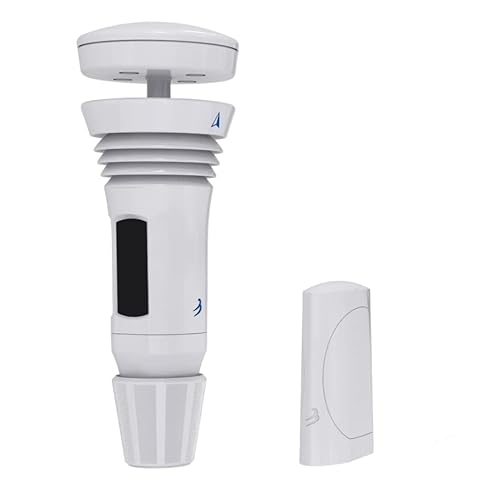
    It’s surprisingly small and light at 7.25 inches by 7.25 inches by 12 inches and just 3.5 pounds, making the installation easy. As you can see from the picture, nearly the entire sensor fits in my hand. This compact design allows for much less clumsy installation — if you’ve installed a weather station before, you know the sensor suites are often bulky and hard to maneuver.

    Since everything is pre-assembled, you place the included base station within range of your Wi-Fi router and the Tempest within range of the base station. To be safe, we recommend less than 100 feet for the most reliable communication. You should start seeing data in your app within minutes. One tip, though: don’t forget to turn the sensor suite on! If you don’t do that first, the installation will fail.

    Tempest Weather System in hand best weather station home

    Lots of functionality

    There is no console with the Tempest: everything is handled through the app. Save for a color theme change from WeatherFlow’s sky blue to the purple shades that Tempest now uses, everything is the same. Data updates every three seconds, even if you’re not on the same Wi-Fi. By a large margin, that’s faster than any other station: most updates to the app in 60-second increments.

    The Tempest reports temperature, humidity, wind speed and direction, and rainfall, and also includes a UV and light sensor, as well as built-in lightning detection. Thanks to haptic technology, it can also sense precipitation intensity.

    Data collected by your Tempest is sent to WeatherFlow, which is used to improve the accuracy of its local forecasts. It is also shared with the National Weather Service and others as well. As expected of a smart weather station, the Tempest supports Amazon Alexa and IFTTT. We did notice that support for Google Home (formerly Google Assistant) is no longer available, a change from the integrations available at launch.

    From our understanding, this is due to Google ending support for the methods Tempest used to connect to Assistant. It appears the change is substantial enough to require significant modifications to the platform itself, which, at least for the moment, Tempest developers do not plan on correcting.

    Google Home is used by roughly a quarter of all smart speaker users, so this may be a significant issue for some. It’s enough to impact our scoring metrics, as other platforms have not had the same problem and still offer Google Home support.

    Tempest Weather System Accuracy and Performance

    While launch units did have issues with calibration, our analysis of recent reviews seems to suggest that’s no longer an issue. The station is supposed to self-calibrate, so you should not have to make any changes if you followed the setup correctly.

    Data reports anywhere from two to 30 seconds, depending on the sensor. In our previous test in 2020, we found that overall, the readings from all sensors were within acceptable ranges (although humidity readings sometimes felt a bit on the high side). Still, the haptic rain gauge struggled (we consider temperatures within two degrees, humidity within 5%, barometric pressure within .05″, and rainfall within .02″ of an inch “acceptable” — we don’t include wind because most home weather stations are not located at the proper height).

    The Tempest also includes lightning detection, but that’s so good it deserves a separate section (hint: keep reading).

    In the re-review, we aimed to determine whether the haptic rain gauge had improved. We loved the sensitivity and how quickly the Tempest informed us that it had detected rain, often within seconds. This is perfect for smart home applications, especially smart home sprinkler systems. However, we were much less impressed with its accuracy in measuring rainfall.

    The “Rain Check” feature remains, now called NearCast Rain. It seems to function a bit differently than Rain Check, though. I don’t remember Rain Check in 2020 adjusting measured rainfall in real-time; instead, the adjustment happened overnight. Here, it seems to be continuously occurring. However, I question whether it is really necessary.

    In 2020, the Tempest was under-measuring rainfall whether the feature was on or off. To our surprise, in our 2024 test, with NC Rain off, in extremely heavy rain, the measured rainfall was within .05″ of our KestrelMet 6000. Previously, the differences were measured in tenths. Keeping NC Rain on actually made the Tempest much less accurate, the complete opposite of our previous experience. We’d need to watch this over time, but this is a significant improvement and led to a slight adjustment upward in the Tempest’s overall score.

    Years ago, the Rain Check adjustment was needed because the haptic rain gauge wasn’t working well. Now it may be working against it. While this may have some use to WeatherFlow for their forecast models, it isn’t a real measurement — rain is measured at the point of the gauge. We’re just not fans of the idea at all.

    Read more: How to make your Tempest Weather System rain gauge more accurate

    It still has the best lightning detection we’ve seen

    So we told you to keep reading because the lightning detection is just that good. It is. Over the past decade, we’ve tested many lightning detection options from various manufacturers. We’ve seen it all, including some that felt like you’d have a better idea of incoming storms if you listened to static on AM radio.

    That is not the case here at all. Both during our initial test and our re-review, the Tempest detected lightning strikes quicker and more accurately than any other system we’ve tested. We use lightningmaps.org during storms to verify strike data. The numbers were very close to what our Tempest saw, and the distance detection was reasonably accurate.

    For fun, we tried to use IFTTT to light up our Nanoleaf Panels for each lightning strike, but unfortunately, it seems it’s rate-limited to once a minute, either on IFTTT’s or Tempest’s end. It would have been cool during the line of thunderstorms in near-real time flashing on our Nanoleafs, but it was not to be.

    Lightning strikes distance chart for backyard.

    The Tempest Weather System has gotten better, for sure.

    We were bummed about the performance of the haptic rain sensor in our original review and were perhaps the loudest in our criticism of it. However, we are happy to say that things have gotten much better. Lightning detection remains the top reason we keep it as our Editor’s Choice — there is no comparison in terms of performance with any other weather station.

    Sure, the lack of Google Home support is a real pain for those in the Google ecosystem, but overall, the smart home capabilities remain robust. At $339, it’s not a bad deal, especially considering most decent home weather stations these days average around $500 or more. If you can not afford a pro-grade home weather station, the Tempest is probably your best bet.

    We earn a commission when you buy through some links on this page. Cirrusly Weather is our sister store, owned by the same people as The Weather Station Experts.

    Tempest Weather System

    Tempest Weather System

    4.5 / 5 Editorial rating

    WeatherFlow is a relatively recent entrant to the home weather station market, although it has years of experience. Its coastal network of stations has been delivering vital information to meteorologists for years and has proven useful (and durable) in landfalling hurricanes. The Tempest is WeatherFlow’s first attempt at a home weather station. For the most part, it’s a good start. It’s the only one of our stations with built-in lightning detection, one of Tempest’s standout features, and operates entirely on solar power. We found that the real-time lightning data matched better with data from professional lightning detection networks. It regularly detected distant lightning faster than any other station we’ve tested.
  • Which Davis Weather Station Should I Buy?How to pick the right Davis weather station for your needs

    Which Davis Weather Station Should I Buy?
    How to pick the right Davis weather station for your needs

    It’s no secret that we’re big fans of Davis weather stations. They might not be the fanciest home weather stations, but they have a proven record of reliability that few other companies can match. Their stations last for decades and have measured the highest wind speed recorded by a personal weather station, 199mph!

    Davis Instruments currently sells two weather stations: a cheaper model called the Vantage Vue, and a pro-grade model, the Vantage Pro2. Each model has advantages and disadvantages, which we’ll explain in our Davis weather station comparison. We’ll also compare specifications, discuss the WeatherLink Console, and touch on AirLink, which adds air quality measurements to your weather station setup.

    Davis Weather Station Models

    We earn a commission when you buy through some links on this page. Cirrusly Weather is our sister store, owned by the same people as The Weather Station Experts. As an Amazon Associate I earn from qualifying purchases.

    1. 1

      Davis Vantage Vue

      Davis Vantage Vue

      4.2 / 5 Editorial rating

      The reliability of Davis weather stations is legendary in the weather enthusiast community. I’ve had mine running continuously since September 2016, and I know others who have had theirs for over a decade. There is also the story of a gentleman with a Davis Weather Monitor II (a predecessor to the Vue) who recently upgraded after 27 years (that’s not a typo). While you don’t get the unbeatable accuracy of the high-end Davis Vantage Pro 2 home weather station, my experience has been positive. With the WeatherLink Console, sharing your data is super easy.
    2. 2

      Davis Vantage Pro2

      Davis Vantage Pro2

      4.2 / 5 Editorial rating

      The Davis Vantage Pro2 is one of the best high-end wireless home weather stations you can buy and is made even better by WeatherLink Live or the WeatherLink Console. The Vantage Pro2 is a proven workhorse. Several years ago in the Caribbean, a VantagePro 2 recorded a 199mph wind gust in a hurricane before its mast snapped. That’s the highest wind reading ever recorded on a home weather station!
    3. 3

      Davis Vantage Pro2 Plus

      Davis Vantage Pro2 Plus

      4.3 / 5 Editorial rating

      We’ll admit that we completely ignored the Vantage Pro2 Plus for years. The reason was the price. With a console that hadn’t been updated in 20 years, and other pro-grade stations available, we just didn’t find it a great value. With the WeatherLink Console that’s changed, and the Vantage Pro2 Plus is suddenly much more attractive.

    Certain content that appears on this site comes from Amazon. This content is provided “as is” and is subject to change or removal at any time.

    Expand Your Davis Weather Station

    We earn a commission when you buy through some links on this page. Cirrusly Weather is our sister store, owned by the same people as The Weather Station Experts. As an Amazon Associate I earn from qualifying purchases.

    1. 1

      Davis Instruments AirLink

      Davis Instruments AirLink

      4.5 / 5 Editorial rating

      Davis’ AirLink air quality monitor doesn’t measure carbon dioxide or VOCs but is one of the few monitors to detect PM1 particulate matter. PM1 is especially dangerous as it is small enough to penetrate the bloodstream and is difficult to disperse. While you can use the AirLink inside, we recommend one of our internal air quality monitors because they can measure much more than just particulate matter. Remember that you need a WeatherLink Live access point or the WeatherLink Console to use the AirLink, which comes with either the Vantage Vue or Vantage Pro2 weather station. This worked especially well during the summer of 2023, as wildfire smoke caused poor air quality at TWSE HQ for several days.

      What we like

      • Can measure PM1 concentrations
      • Integrates with WeatherLink Live
      • Accurate readings, highly sensitive instrumentation

      Keep in mind

      • Really only makes sense if you already own a davis station
    2. 2

      WeatherLink Console by Davis Instruments

      WeatherLink Console by Davis Instruments
      The WeatherLink Console is Davis’ brand new way of interacting with your Davis weather station. It replaces the WeatherLink Live and will ship with all Davis packages. While the console’s introduction has resulted in a price increase across the board for most Davis weather station packages, it’s for the best. An additional piece of hardware is no longer needed to connect your station to the internet. The screen, which measures about eight inches diagonally, is viewable from across the room and is touch-enabled. You can set about 100 alarms and view historical and graphed data on the console.

      What we like

      • Arguably the best-looking console available
      • Feature-packed
      • It appears to be expandable and upgradeable

      Keep in mind

      • The touch UI isnt the best
      • Its best features are buried
      • Expensive for a console
    3. 3

      Davis Instruments WeatherLink Live

      Davis Instruments WeatherLink Live
      Davis tells us that the will be supported for the foreseeable future (and at least initially, is needed if you have an AirLink — the WeatherLink Console didn’t ship with support for Davis’ air quality device). And in some places, you can still find it, although rising component costs have made it much more expensive than it was at launch (by about $100). We like the live updating within the app when you’re on the same Wi-Fi network as your WeatherLink Live. It’s a nifty feature, and I’ll admit to watching it intently during some of our stormiest weather. The WeatherLink Console can also do the same thing, by the way. If you’re not sold on the console, the WeatherLink Live is worth considering.

      What we like

      • Super quick setup
      • Live in-app data when on your home network
      • Adds expandability to your Davis station
      • Ready for the smart home

      Keep in mind

      • For current Davis users, no way to merge data

    Certain content that appears on this site comes from Amazon. This content is provided “as is” and is subject to change or removal at any time.

    Davis Mounts

    We earn a commission when you buy through some links on this page. Cirrusly Weather is our sister store, owned by the same people as The Weather Station Experts.

    Popular Weather Station Mounting Options

    We earn a commission when you buy through some links on this page. Cirrusly Weather is our sister store, owned by the same people as The Weather Station Experts. As an Amazon Associate I earn from qualifying purchases.

    Scroll horizontally to compare all products.

    Certain content that appears on this site comes from Amazon. This content is provided “as is” and is subject to change or removal at any time.

    Davis Vantage Vue vs Vantage Pro2: Our Verdict

    Either Davis weather station is a great choice, but the Davis Vantage Pro2 is a solid station overall if you can afford it. With best-in-class accuracy and a track record of proven reliability, it’s one of the best weather stations available. The introduction of the WeatherLink Console makes it even better. But it’s very, very expensive.

    We’ve owned a Vantage Vue since 2016 and love it. We’ve had no major mechanical problems with our station, and the accuracy is outstanding as long as you properly maintain it. And we’ve also purchased AirLink and are happy with its performance. But our next station is a Vantage Pro2, for sure.

  • What Ambient Weather Station Should I Buy?We break down Ambient Weather's extensive weather station lineup

    What Ambient Weather Station Should I Buy?
    We break down Ambient Weather’s extensive weather station lineup

    The Ambient Weather brand has been around for a long time. Initially a great place to find deals on various weather instruments, it now sells its own branded weather instruments and gadgets. That move has paid off: their stations have become a ‘cult favorite’ among weather enthusiasts, thanks to a great mix of functionality and price. While our international readers may recognize some of these as Ecowitt weather stations, they offer some functionality that Ecowitt does not.

    Ambient weather stations often have features that other weather stations don’t at the same price point, and the company has fully embraced smart home technology. Every internet-connected Ambient Weather station supports Amazon Alexa, Google Assistant, and IFTTT. And the accuracy is surprisingly good for the price. So which one should you buy? Keep reading.

    Ambient Weather Station Comparisons

    We often get asked which Ambient weather station a reader should pick. Below, we’ve compared Ambient Weather’s most popular models to compare their differences and offer our recommendations.

    WS-2000 vs WS-2902

    We earn a commission when you buy through some links on this page. Cirrusly Weather is our sister store, owned by the same people as The Weather Station Experts. As an Amazon Associate I earn from qualifying purchases.

    Ambient Weather WS-2000

    Ambient Weather WS-2000
    The Ambient Weather WS-2000 is a combination of two wireless home weather stations. The sensor array from the WS-2902 is combined with the TFT LCD console from the WS-5000, allowing for a cheaper alternative to the now $449 (MSRP) WS-5000. While this combination comes at the cost of accuracy, it adds some important functionality over the budget-minded WS-2902. With Ambient Weather internet-connected stations, the communications are handled by the console. The cheaper color LCD console in the Ambient Weather WS-2902 package only supports the sensor suite. However, the TFT LCD console supports any accessory sensor Ambient Weather makes. It’s not like the sensor suite is that inaccurate either: as we noted in our review, readings were often not far from our Davis Vantage Vue weather station.

    Ambient Weather WS-2902

    Ambient Weather WS-2902

    4 / 5 Editorial rating

    The Ambient Weather WS-2902 is surprisingly feature-packed and accurate, given its price. Many of the cheap wireless home weather stations we’ve tested had issues that prevented us from genuinely recommending them. The WS-2902 does not. It isn’t as accurate as the WS-5000 or Davis weather stations, but it’s also less than half the price. The connectivity is a standout feature at its price point, with full smart-home capabilities thanks to IFTTT, Google Assistant, and Amazon Alexa support.

    Certain content that appears on this site comes from Amazon. This content is provided “as is” and is subject to change or removal at any time.

    Our take: We think that those debating between the WS-2000 and WS-2902 will want to consider their budget first. The WS-2902 is an excellent station for the price. However, the WS-2000 console allows you to add and view additional sensors and is certainly better quality. If you want to observe the weather casually, then the WS-2902 is fine. However, if you think you might have other uses for your Ambient weather station down the road, then the WS-2000 is the better long-term choice.

    While both stations perform well, we recommend the WS-1553-IP instead. It is cheaper than the WS-2000 and offers expandability that the WS-2902 doesn’t. However, it does not have a console.

    Who should buy the WS-2902?

    The Ambient Weather WS-2902 is an excellent entry-level weather station and is one of our top choices for casual weather observers. In our tests, the WS-2902 performed nearly as well as the Davis Vantage Vue for a fraction of the price. Add the internet connectivity of this station, not something you often see in entry-level stations, and it’s a real bargain, in our opinion.

    We earn a commission when you buy through some links on this page. Cirrusly Weather is our sister store, owned by the same people as The Weather Station Experts. As an Amazon Associate I earn from qualifying purchases.

    Ambient Weather WS-2902

    Ambient Weather WS-2902

    4 / 5 Editorial rating

    The Ambient Weather WS-2902 is surprisingly feature-packed and accurate, given its price. Many of the cheap wireless home weather stations we’ve tested had issues that prevented us from genuinely recommending them. The WS-2902 does not. It isn’t as accurate as the WS-5000 or Davis weather stations, but it’s also less than half the price. The connectivity is a standout feature at its price point, with full smart-home capabilities thanks to IFTTT, Google Assistant, and Amazon Alexa support.

    Certain content that appears on this site comes from Amazon. This content is provided “as is” and is subject to change or removal at any time.

    Who should buy the WS-2000?

    The Ambient Weather WS-2000 uses the same sensor suite as the WS-2902. However, the WS-2000 swaps out the LCD console for the much better console found in the WS-5000. This allows the WS-2000 to support the vast array of optional sensors that Ambient Weather provides, but at a much more affordable price.

    We earn a commission when you buy through some links on this page. Cirrusly Weather is our sister store, owned by the same people as The Weather Station Experts. As an Amazon Associate I earn from qualifying purchases.

    Ambient Weather WS-2000

    Ambient Weather WS-2000
    The Ambient Weather WS-2000 is a combination of two wireless home weather stations. The sensor array from the WS-2902 is combined with the TFT LCD console from the WS-5000, allowing for a cheaper alternative to the now $449 (MSRP) WS-5000. While this combination comes at the cost of accuracy, it adds some important functionality over the budget-minded WS-2902. With Ambient Weather internet-connected stations, the communications are handled by the console. The cheaper color LCD console in the Ambient Weather WS-2902 package only supports the sensor suite. However, the TFT LCD console supports any accessory sensor Ambient Weather makes. It’s not like the sensor suite is that inaccurate either: as we noted in our review, readings were often not far from our Davis Vantage Vue weather station.

    Certain content that appears on this site comes from Amazon. This content is provided “as is” and is subject to change or removal at any time.

    AmbientWeather.net dashboard for ambient weather stations
    The Ambientweather.net dashboard.

    WS-2902 Vs. WS-5000

    We earn a commission when you buy through some links on this page. Cirrusly Weather is our sister store, owned by the same people as The Weather Station Experts. As an Amazon Associate I earn from qualifying purchases.

    Ambient Weather WS-2902

    Ambient Weather WS-2902

    4 / 5 Editorial rating

    The Ambient Weather WS-2902 is surprisingly feature-packed and accurate, given its price. Many of the cheap wireless home weather stations we’ve tested had issues that prevented us from genuinely recommending them. The WS-2902 does not. It isn’t as accurate as the WS-5000 or Davis weather stations, but it’s also less than half the price. The connectivity is a standout feature at its price point, with full smart-home capabilities thanks to IFTTT, Google Assistant, and Amazon Alexa support.

    Ambient Weather WS-5000

    Ambient Weather WS-5000

    4.4 / 5 Editorial rating

    The WS-5000 features a redesigned sensor suite, including an ultrasonic anemometer. Eliminating the cup anemometer found on other weather stations drastically reduces the number of moving parts and can measure wind speed as accurately as the cup-and-vane. This should extend its useable life as the traditional anemometer requires ongoing maintenance to ensure trouble-free use.

    Certain content that appears on this site comes from Amazon. This content is provided “as is” and is subject to change or removal at any time.

    Our take: The WS-2902 and the WS-5000 are aimed at two different types of consumers. The WS-2902 is an entry-level Ambient weather station. The WS-5000 is intended for weather enthusiasts and those looking for better accuracy. If you’re deciding between these two and can afford them, opt for the WS-5000 instead.

    The WS-5000’s expandability is a big plus for us. And with a ton of additional sensors available, the WS-5000 is more suited for specific applications, such as agriculture. However, it’s also one of the most expensive weather stations on the market, and we don’t feel comfortable recommending the WS-5000 unless you have the budget for it.

    We’d go with the WS-5000-IP3 here, which is cheaper than the WS-5000 unless you absolutely need a console. Doing so will save you about $100.

    WS-2902C UV and light sensors
    Close-up of the sensor suite found on the Ambient Weather WS-2000 and WS-2902C.

    WS-2000 Vs. WS-5000

    We earn a commission when you buy through some links on this page. Cirrusly Weather is our sister store, owned by the same people as The Weather Station Experts. As an Amazon Associate I earn from qualifying purchases.

    Ambient Weather WS-2000

    Ambient Weather WS-2000
    The Ambient Weather WS-2000 is a combination of two wireless home weather stations. The sensor array from the WS-2902 is combined with the TFT LCD console from the WS-5000, allowing for a cheaper alternative to the now $449 (MSRP) WS-5000. While this combination comes at the cost of accuracy, it adds some important functionality over the budget-minded WS-2902. With Ambient Weather internet-connected stations, the communications are handled by the console. The cheaper color LCD console in the Ambient Weather WS-2902 package only supports the sensor suite. However, the TFT LCD console supports any accessory sensor Ambient Weather makes. It’s not like the sensor suite is that inaccurate either: as we noted in our review, readings were often not far from our Davis Vantage Vue weather station.

    Ambient Weather WS-5000

    Ambient Weather WS-5000

    4.4 / 5 Editorial rating

    The WS-5000 features a redesigned sensor suite, including an ultrasonic anemometer. Eliminating the cup anemometer found on other weather stations drastically reduces the number of moving parts and can measure wind speed as accurately as the cup-and-vane. This should extend its useable life as the traditional anemometer requires ongoing maintenance to ensure trouble-free use.

    Certain content that appears on this site comes from Amazon. This content is provided “as is” and is subject to change or removal at any time.
    Our take: While the WS-2000 and WS-5000 share the same console, the WS-5000 introduces an updated (and we’d argue more accurate) sensor suite. This makes the WS-5000 our preferred Ambient weather station for pro-level users looking for alternatives to Davis weather stations.

    This said, if you’re looking for true pro-grade accuracy, we’d still recommend a weather station like the Davis Vantage Vue, and especially the Davis Vantage Pro2. Even without decent smart home connectivity, Davis is still the most accurate personal weather station on the market.

    We’d recommend the WS-5000.

    Who should buy the WS-5000?

    The Ambient Weather WS-5000 is the company’s latest model and includes a new sensor suite. The rain gauge is separate from the rest of the sensor suite for more optimal placement, and Ambient has replaced the traditional cup-and-vane anemometer with sonic technology. Our tests found this station incredibly accurate, although the high price is a significant barrier for most shoppers.

    We earn a commission when you buy through some links on this page. Cirrusly Weather is our sister store, owned by the same people as The Weather Station Experts. As an Amazon Associate I earn from qualifying purchases.

    Ambient Weather WS-5000

    Ambient Weather WS-5000

    4.4 / 5 Editorial rating

    The WS-5000 features a redesigned sensor suite, including an ultrasonic anemometer. Eliminating the cup anemometer found on other weather stations drastically reduces the number of moving parts and can measure wind speed as accurately as the cup-and-vane. This should extend its useable life as the traditional anemometer requires ongoing maintenance to ensure trouble-free use.

    Certain content that appears on this site comes from Amazon. This content is provided “as is” and is subject to change or removal at any time.

    Popular Weather Station Mounting Options

    We earn a commission when you buy through some links on this page. Cirrusly Weather is our sister store, owned by the same people as The Weather Station Experts. As an Amazon Associate I earn from qualifying purchases.

    Scroll horizontally to compare all products.

    Certain content that appears on this site comes from Amazon. This content is provided “as is” and is subject to change or removal at any time.

    Wrapping Up

    Ambient Weather stations are outstanding and often surprised us with how accurate they were, which is hard to find in lower-priced weather stations. Plus, they’re future-ready with smart home capabilities that few other manufacturers offer, giving them an advantage in a competitive market.

    No matter which one you choose, you’ll be backed up by excellent customer service. In all our experiences with their support team, our customer service representative handled questions and issues promptly. This is one area where the industry could improve, and Ambient Weather is doing it correctly.

  • What AcuRite Weather Station Should I Buy?Explaining the differences between the AcuRite Notos, Iris, and Atlas

    What AcuRite Weather Station Should I Buy?
    Explaining the differences between the AcuRite Notos, Iris, and Atlas

    AcuRite is likely one of the world’s most prolific weather instrument manufacturers. Chances are you’ve seen at least one AcuRite weather station at your local retailer: Walmart, Target, and Home Depot sometimes sell the AcuRite 3-in-1 or Acurite 5-in-1 weather stations (or both) in their brick-and-mortar stores.

    But as you may have already read in our weather station guide, we don’t recommend purchasing these, as they are often cheaply made and have a poor reliability record. Yes, that includes some AcuRite models.

    To answer this, AcuRite introduced the Atlas (our top pick), a higher-end station, and has often been rumored to be working on the Atlas Elite. These models are a step up from previous models. We’re also big fans of their app, which is arguably one of the best weather apps on the market.

    AcuRite Weather Station Comparison

    Below, we’ve laid out the specifications for the Notos, Iris, and Atlas weather stations. Remember, the Notos is the new name for the 3-in-1, and Iris is the new name for the 5-in-1. The Iris and Atlas include a solar panel on the sensor suite to increase sensor battery life.

    AcuRite Notos vs Iris

    We earn a commission when you buy through some links on this page. Cirrusly Weather is our sister store, owned by the same people as The Weather Station Experts. As an Amazon Associate I earn from qualifying purchases.

    Certain content that appears on this site comes from Amazon. This content is provided “as is” and is subject to change or removal at any time.

    In this comparison, the Iris is the better of the two AcuRite home weather stations. The Notos is little more than a glorified digital thermometer. However, its price makes it an attractive alternative to the more expensive stations.

    If you’re okay with losing rainfall and wind direction and don’t have a lot of space to spare, opt for the Notos. However, if you can afford it, opt for the Iris instead; we think you’ll be happier overall.

    AcuRite Iris vs Atlas

    We earn a commission when you buy through some links on this page. Cirrusly Weather is our sister store, owned by the same people as The Weather Station Experts. As an Amazon Associate I earn from qualifying purchases.

    Certain content that appears on this site comes from Amazon. This content is provided “as is” and is subject to change or removal at any time.
    Whether you select the Iris or the higher-end Atlas depends on your budget. Both support the Access base station, which connects to the Internet to share weather data, which the Notos do not. They also support the most common weather measurements on any good station.

    Overall, the Atlas instrumentation is of higher quality, thanks to an included daytime aspirating fan in the sensor housing. In our tests, this made the Atlas more accurate than even the Davis Vantage Vue in temperature and humidity readings. Atlas is it if you’re looking for better accuracy at a price significantly lower than other stations.

    AcuRite Atlas vs Atlas Elite

    It’s tough for us to truly judge how much better the AcuRite Atlas Elite is because it’s yet to be released. But we’d guess many of the Atlas issues would be corrected. With our Atlas, the lightning detection wasn’t as precise as we would have liked, and the rain gauge significantly undercounted rainfall.

    AcuRite promises professional-grade instrumentation for the Atlas Elite, so we’ll have to wait and see.

    AcuRite vs Ambient Weather

    Both AcuRite and Ambient Weather excel at making affordable weather stations, but we prefer Ambient Weather’s weather stations for their accuracy. The Ambient Weather WS-5000 is far more expensive than the AcuRite Atlas. However, it’s a much more accurate weather station. Similarly, the Ambient Weather WS-2902 is competitively priced with the AcuRite Iris but is generally more accurate.

    Our Test Results for AcuRite Weather Stations

    AcuRite Iris

    Accuracy (25%)Value (25%)Durability (20%)Feature Set (20%)Ease of Use (20%)Total Score
    3.5/54.5/54/53/55/580/100

    MSRP: ~$150

    Last year’s score: 75 (+5)

    You might wonder why we rank the Iris ahead of the Atlas, but let’s explain. The Iris is an easy-to-use weather station with average durability and generally a good overall value. However, every AcuRite model seems to have something it doesn’t do well, and with the Iris that’s wind readings. The score change here was due to an adjustment upward in the accuracy rating (3 to 3.5) based on more data.

    We earn a commission when you buy through some links on this page. Cirrusly Weather is our sister store, owned by the same people as The Weather Station Experts. As an Amazon Associate I earn from qualifying purchases.

    Certain content that appears on this site comes from Amazon. This content is provided “as is” and is subject to change or removal at any time.

    AcuRite Atlas

    Accuracy (25%)Value (25%)Durability (20%)Feature Set (20%)Ease of Use (20%)Total Score
    3.5/54/54/54/55/578/100

    MSRP: $269.99

    Last year’s score: 78 (+0)

    You’d think the Atlas would do better as a “higher-end” station. However, the rain gauge here is horribly inaccurate, and early models suffered from interference, making the optional lightning detector useless. While the latter was fixed in a recall of affected units, the rain gauge issue appears to be a design flaw.

    AcuRite’s failure to produce a true pro-grade station may have been the reason why the Atlas Elite never saw the light of day, which was intended to compete with the Vantage Pro2. A shame, because the My AcuRite app is one of our favorites.

    We earn a commission when you buy through some links on this page. Cirrusly Weather is our sister store, owned by the same people as The Weather Station Experts. As an Amazon Associate I earn from qualifying purchases.

    Certain content that appears on this site comes from Amazon. This content is provided “as is” and is subject to change or removal at any time.
    Popular Weather Station Mounting Options

    We earn a commission when you buy through some links on this page. Cirrusly Weather is our sister store, owned by the same people as The Weather Station Experts. As an Amazon Associate I earn from qualifying purchases.

    Scroll horizontally to compare all products.

    Certain content that appears on this site comes from Amazon. This content is provided “as is” and is subject to change or removal at any time.

    Wrapping Up

    As we said previously, we strongly recommend not purchasing AcuRite products from a retailer. These are lower-quality models than what you see above. Instead, stick with the recommended packages above to get the best value for your money.

  • Maximum Weather Instruments Buyers GuideOur guide to the best analog weather instruments on the market

    Maximum Weather Instruments Buyers Guide
    Our guide to the best analog weather instruments on the market

    Maximum Weather Instruments is a manufacturer of premium weather instrumentation. Where most other weather station manufacturers have “gone digital,” Maximum still focuses on high-quality analog weather instrumentation.

    While purchasing a single Maximum instrument can cost as much as a modern digital home weather station, it’s worth the money. Each device is still manufactured and tested for accuracy in Maximum’s Massachusetts plant. The sensors and parts are all extremely high quality, and the instruments are well constructed.

    Although the company has been around for six decades, it only recently began to make a big push into the consumer market. You’ll find Maximum’s weather instruments in many businesses and schools, but often in someone’s living room.

    We highly recommend Maximum’s products if you’re looking for scientific-grade weather instrumentation. We’ve developed this guide to help introduce you to the brand if you’ve never heard of them before. It’s also for those in the market for a Maximum weather instrument who don’t know which one to pick.

    BIG NEWS! Our sister site Cirrusly Weather is now an authorized reseller of Maximum Weather Instruments, including their weather station packages. See the complete line here.

    What weather instruments does Maximum offer?

    Maximum has a pretty expansive product offering. You can click on the instrument to skip ahead in this guide if you’d like.

    Choosing a Finish, Dial Face Color, and Mount

    One of the nice things about Maximum is the customizability. All come with the option of one of four finishes:

    • Polished Brass (least expensive)
    • Polished Chrome
    • Satin Nickel
    • PVD (tarnish-resistant) Brass (most expensive)

    And most in either of two instrument face colors:

    • Black
    • Silver

    Maximum offers wood mounts in either mahogany or oak, available in various shapes and sizes, allowing you to customize your Maximum weather station to match your home or office’s decor.

    For more on which colorways are available, we recommend visiting the product page on Cirrusly Weather.

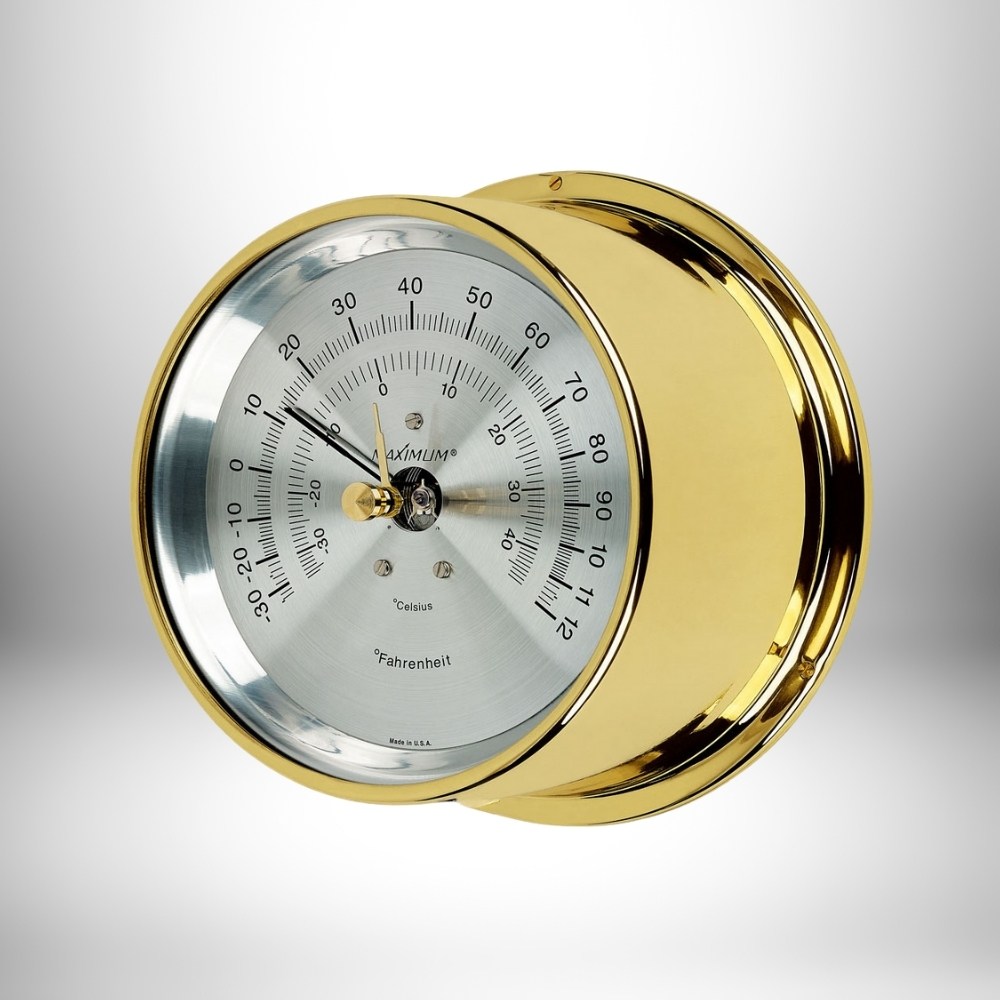
    Maximum Weather Instruments Thermometers

    Maximum has two analog thermometers on the lower end and a higher-end combination thermometer and barometer. The Mini-Max can store high and low readings until manually reset, but it can only measure temperature in one location.

    The similarly priced Criterion can measure temperature in up to three locations (including water temperature), but you lose the ability to store those readings.

    We earn a commission when you buy through some links on this page. Cirrusly Weather is our sister store, owned by the same people as The Weather Station Experts. As an Amazon Associate I earn from qualifying purchases.

    Maximum Mini-Max Remote Reading Thermometer

    Maximum Mini-Max Remote Reading Thermometer
    The Maximum Mini-Max combines an elegant analog thermometer with electronic smarts to track high and low readings until you reset them. Unlike most outdoor thermometers today, the Mini-Max’s sensor is wired, but you have 60 feet of cable to place it just about anywhere you’d like. This instrument is also Wi-Fi compatible with the optional Wi-Fi interface. Readings in Fahrenheit and Celsius, with temperature minder to mark the current temperature AC adapter and outdoor temperature sensor with 60′ cable included

    Certain content that appears on this site comes from Amazon. This content is provided “as is” and is subject to change or removal at any time.

    We earn a commission when you buy through some links on this page. Cirrusly Weather is our sister store, owned by the same people as The Weather Station Experts. As an Amazon Associate I earn from qualifying purchases.

    Maximum Criterion Thermometer

    Maximum Criterion Thermometer

    3.8 / 5 Editorial rating

    While the Criterion is an expensive indoor-outdoor thermometer, we wholeheartedly recommend it thanks to its high-quality construction and outstanding accuracy. You can monitor the temperature in up to three locations, with an adjustable marker to mark the current temperature to watch for trends. The Criterion is a great first Maximum instrument, and once you see how good it looks (and works), we think it won’t be your last.

    Certain content that appears on this site comes from Amazon. This content is provided “as is” and is subject to change or removal at any time.

    The Mystic is a digital thermometer and barometer and is exceptionally accurate for a digital weather instrument. It can display current, high, and low temperature and barometer readings, as well as the rate of change.

    Even more impressive is its storage capabilities. The Mystic has a massive ten-year backup, so you’ll never lose your data — no matter how long you own this remarkable instrument.

    We earn a commission when you buy through some links on this page. Cirrusly Weather is our sister store, owned by the same people as The Weather Station Experts. As an Amazon Associate I earn from qualifying purchases.

    Maximum Mystic Barometer Thermometer

    Maximum Mystic Barometer Thermometer
    The Mystic is one of the core digital instruments in Maximum’s portfolio, and displays two important weather conditions: temperature and atmospheric pressure. Users can choose between Celsius and Fahrenheit for temperature, and four units for pressure (inHg, mmHg, kPa, MB). Of course, the Mystic also keeps track of rate of change, and when connected with the Merlin, you also gain wind chill readings as well. This instrument is Wi-Fi compatible with the optional Wi-Fi interface (sold seperately).

    Certain content that appears on this site comes from Amazon. This content is provided “as is” and is subject to change or removal at any time.
    Maximum Weather Instruments Anemometers

    The anemometer put Maximum Weather Instruments in business back in 1968 — so you’d expect a high-quality product. Here, two analog anemometers are offered that require no power to operate, as well as a digital AC-powered anemometer.

    The Vigilant, the company’s first analog weather instrument, measures just windspeed, while the Maestro adds a digital wind direction indicator to the face. In both cases, the maximum wind speed is 100 mph, which is more than enough unless you live on the coast.

    You can think of the Merlin as the companion instrument to the Mystic Thermometer and Barometer above. It records trends and changes in wind conditions and has four different modes:

    • Present: existing wind conditions
    • Peak: Speed and direction of the highest gust since the last reset
    • Average: average wind speed and direction since the last reset
    • Forecast: compares the most recent 12-minute average with the previous 12 minutes

    If you’re planning on the Mystic, we strongly recommend combining the Merlin and Rainwatch below for an outstanding digital weather station with accuracy that is among the best in pro-grade weather stations.

    Maximum Anemometers

    We earn a commission when you buy through some links on this page. Cirrusly Weather is our sister store, owned by the same people as The Weather Station Experts. As an Amazon Associate I earn from qualifying purchases.

    1. 1

      Maximum Vigilant Wind Speed Analog Instrument – Brass Case, Silver Dial

      Maximum Vigilant Wind Speed Analog Instrument - Brass Case, Silver Dial
      The Vigilant displays wind speed and gust up to 100 MPH (also 160 km/h). Self-powered by rooftop sensor. Features Maximum’s unique Gust Register, so you can monitor highest gust even if you missed the actual wind blast. Ships complete with 60′ cable, sensor and mounting hardware, and it does not need batteries or any additional power source.
    2. 2

      Maximum Maestro Wind Speed and Direction

      Maximum Maestro Wind Speed and Direction
      Maestro displays wind speed, wind direction and the highest gust (up to 100 MPH and 160 km/h) A self-powered rooftop sensor measures the wind speed. The wind direction is displayed across 16 compass points using LEDs that run off the supplied AC power pack Leverage Maximum’s unique Gust Register to save the highest gust, which also allows you to monitor highest gusts even when you missed the actual wind blast Maestro ships complete with 60′ cables, AC adapter, sensors and mounting hardware.

    Certain content that appears on this site comes from Amazon. This content is provided “as is” and is subject to change or removal at any time.

    Maximum Weather Instruments Hygrometers

    Maximum offers two hygrometers, an indoor model called the ComfortMinder, and an outdoor hygrometer called the Stratus. While the price of the ComfortMinder isn’t as high as some of Maximum’s other offerings, don’t be fooled: it’s just as accurate. If you’re sensitive to changes in indoor climate, the ComfortMinder is a good buy.

    The Stratus is Maximum’s outdoor model and comes with a sintered bronze enclosure for the outdoor sensor to maintain accuracy. The Stratus does require AC power, so make sure to place it near a power outlet.

    Maximum Hygrometers

    We earn a commission when you buy through some links on this page. Cirrusly Weather is our sister store, owned by the same people as The Weather Station Experts. As an Amazon Associate I earn from qualifying purchases.

    Maximum Stratus Hygrometer

    Maximum Stratus Hygrometer

    3.7 / 5 Editorial rating

    The Maximum Stratus likely will only be an option as part of a broader set of Maximum instruments due to its price (which explains its lower rating in our metrics – don’t confuse it for a knock on the instrument overall. In fact, it’s the most accurate hygrometer on our list. A user-adjustable needle at the center instrument allows you to spot changes in humidity, although this must be set manually. An external sensor and AC adapter is included, with 60 feet of cable allowing for optimal placement.

    What we like

    • Extremely accurate measurements
    • Beautiful heirloom quality casing

    Keep in mind

    • Extremely expensive on its own
    Maximum Stratus Relative Humidity Instrument - Brass Case, Silver DialMaximum Stratus Relative Humidity Instrument – Brass Case, Silver Dial
    $595.00In stock
    As of
    Price and availability details

    Product prices and availability are accurate as of the date/time indicated and are subject to change. Any price and availability information displayed on Amazon at the time of purchase will apply to the purchase of this product.

    View at Amazon

    Certain content that appears on this site comes from Amazon. This content is provided “as is” and is subject to change or removal at any time.

    Maximum Weather Instruments Barometers

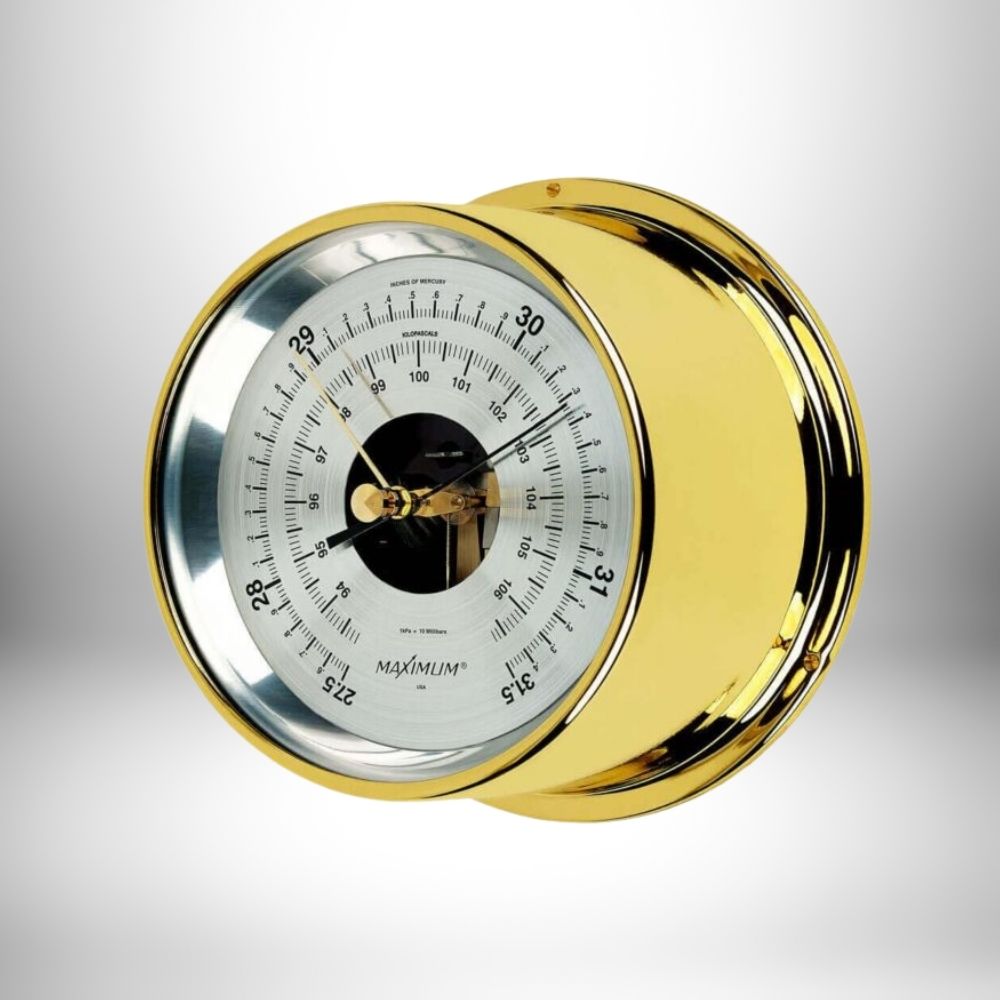
    Barometric pressure accuracy is one of our most common issues in testing home weather stations. The cheaper the weather station, the less accurate the barometric sensor becomes, in our experience. However, that is not an issue with Maximum barometers. Even the cheapest model, the Predictor, is accurate within .16″ of mercury, and the top-of-the-line Proteus is correct within a market-leading .08″.

    Accurate barometer readings are essential to understanding what the weather is doing, and either of the Maximum barometers below is an excellent buy.

    Maximum Barometers

    We earn a commission when you buy through some links on this page. Cirrusly Weather is our sister store, owned by the same people as The Weather Station Experts. As an Amazon Associate I earn from qualifying purchases.

    Certain content that appears on this site comes from Amazon. This content is provided “as is” and is subject to change or removal at any time.

    Maximum Weather Instruments Time and Tide

    Given that Maximum Weather Instruments is a Massachusetts company, it’s not surprising that the company has also produced time and tide clocks. The Meridian features a quartz movement for accurate timekeeping and can be easily adjusted for different locations.

    If you’d like a digital time and tide clock (especially if you’re building a Maximum digital weather station), then the Cronus is the one to pick. However, keep in mind that it is only calibrated for East Coast tides, so unfortunately, it won’t work elsewhere.

    Maximum Time and Tide

    We earn a commission when you buy through some links on this page. Cirrusly Weather is our sister store, owned by the same people as The Weather Station Experts. As an Amazon Associate I earn from qualifying purchases.

    Maximum Meridian Accurate Time and Tide Clock – Brass Case, Silver Dial

    Maximum Meridian Accurate Time and Tide Clock – Brass Case, Silver Dial
    Quartz movement for accuracy Simple mounting system makes it easy to remove from the wall for battery replacement or to adjust for different locations Matches design of other Maximum weather instruments Powered by one AA battery (included)

    Maximum Cronus Digital Time and Tide Clock – Brass Case, Black Dial

    Maximum Cronus Digital Time and Tide Clock – Brass Case, Black Dial
    Provides a digital display of time, date, and tide AC-powered, with a Lithium battery backup to maintain time and date during power outages 5-year manufacturer warranty Maximum advises that the Chronus is set to Atlantic coast tide times. It will not be accurate for the Gulf or West Coasts or elsewhere in the world.

    Certain content that appears on this site comes from Amazon. This content is provided “as is” and is subject to change or removal at any time.

    Maximum Weather Instruments Rain Gauges

    Maximum only offers one rain gauge, but it’s a winner. The Rainwatch is one of the few digital rain gauges on the market with a tipping bucket that meets NWS specifications. That’s why you’ll see this in many meteorology departments in colleges across the country. A 9V battery backup protects your data in the event of a power outage, too.

    We earn a commission when you buy through some links on this page. Cirrusly Weather is our sister store, owned by the same people as The Weather Station Experts. As an Amazon Associate I earn from qualifying purchases.

    Certain content that appears on this site comes from Amazon. This content is provided “as is” and is subject to change or removal at any time.

    Maximum Weather Stations

    If you have some flexibility, choosing one of Maximum’s pre-built weather stations might be a good option. Sometimes, it can save you money over buying the instruments separately. You can also “build your own” station: Maximum sells the mounting panels separately.

    There are a total of twelve different combinations, including two-, three-, four-, five-, and six-gauge layouts. Cirrusly Weather carries the complete line of Maximum weather stations.

    Maximum Weather Instruments FAQ

    Below, we’ve answered some questions about Maximum Weather Instruments that you might have.

    Is everything I need to install my Maximum weather instrument included?

    Barometers, clocks, and indoor instruments will have everything you need. Maximum recommends cable clips or ties to secure sensor wires for outdoor instruments. For wind instruments, you’ll need a mast.

    Are Maximum Weather Instruments easy to install?

    Most indoor instruments require simple mounting knowledge. Outdoor sensors may be more challenging, but they are no more difficult to install than any other home weather station.

    What is Maximum’s warranty policy?

    Maximum offers a market-best five-year warranty on all instruments they sell, except for the Stratus humidity sensor, which has a two-year warranty.

    Does Maximum offer repair services?

    Yes! You can return your instrument to service anytime after your warranty expires. Maximum will inspect your instrument and restore it to factory specifications. You’ll typically hear back from a technician within three days of receiving the instrument, along with the expected repair costs and timeline.

    Wrapping Up

    Maximum has an expansive line of analog and digital weather instruments, and we hope this guide helps clear up any confusion around their product offerings. If you own a Maximum weather instrument, we’d also love to hear about your experiences. Let our readers know in the comments.

  • 10 Prime Day Weather Station Deals to Check OutWe've got great deals from Amazon, and elsewhere, right here!

    10 Prime Day Weather Station Deals to Check Out
    We’ve got great deals from Amazon, and elsewhere, right here!

    Prime Day is here, and the deals are live. For the first time, you have four days to save. This means prices are valid through Friday as opposed to Thursday, like most years. And there are some deals we’d like to share with you off Amazon too, from our sister site Cirrusly Weather and elsewhere.

    Staying on top of Prime Day Deals

    Deals come and go fast on Prime Day, so The Weather Station Experts team will monitor the best deals day and night. We recommend subscribing to our YouTube channel and newsletter, as they will provide the most up-to-date information.

    Before You Shop

    Before diving into our deals, ensure you’re an Amazon Prime member! Some deals are Prime Exclusives, so joining now gets you a 30-day free trial required to take advantage of most deals, and you can cancel at any time!

    Not sure what to get? Let them pick. Amazon also offers Prime gift memberships for as little as $39. (We know from experience as weather geeks that you’ll buy much more once you start weather-watching!)

    Try Prime

    Prime Day weather station deals

    Pre-Prime Day weather station deals were relatively sparse this year, except for the typical early deals on AcuRite weather stations. But some of the typical deals we see have reappeared right on schedule, which we’re sharing below.

    One thing to keep in mind: prices will be higher this year than in years past. The Tempest increased in price $10 on June 1, and the WS-2902 is now $200. This will make it seem like the deals aren’t as good when, in reality, they’re the same discounts provided every year. Ah, inflation and tariffs. 🙁

    Deal #1 – Ambient Weather WS-2902 – $160

    Deal #2 – Ambient Weather WS-2000 – $240

    We earn a commission when you buy through some links on this page. Cirrusly Weather is our sister store, owned by the same people as The Weather Station Experts. As an Amazon Associate I earn from qualifying purchases.

    Ambient Weather WS-2000

    Ambient Weather WS-2000
    The Ambient Weather WS-2000 is a combination of two wireless home weather stations. The sensor array from the WS-2902 is combined with the TFT LCD console from the WS-5000, allowing for a cheaper alternative to the now $449 (MSRP) WS-5000. While this combination comes at the cost of accuracy, it adds some important functionality over the budget-minded WS-2902. With Ambient Weather internet-connected stations, the communications are handled by the console. The cheaper color LCD console in the Ambient Weather WS-2902 package only supports the sensor suite. However, the TFT LCD console supports any accessory sensor Ambient Weather makes. It’s not like the sensor suite is that inaccurate either: as we noted in our review, readings were often not far from our Davis Vantage Vue weather station.

    Certain content that appears on this site comes from Amazon. This content is provided “as is” and is subject to change or removal at any time.

    Deal #3 – Ambient Weather WS-5000 – $360

    Deal # 4 – Ambient Weather WS-4000 – $300

    We earn a commission when you buy through some links on this page. Cirrusly Weather is our sister store, owned by the same people as The Weather Station Experts. As an Amazon Associate I earn from qualifying purchases.

    Certain content that appears on this site comes from Amazon. This content is provided “as is” and is subject to change or removal at any time.
    Deal #5 – Tempest Weather System – $288

    We earn a commission when you buy through some links on this page. Cirrusly Weather is our sister store, owned by the same people as The Weather Station Experts.

    Tempest Weather System

    Tempest Weather System

    4.5 / 5 Editorial rating

    WeatherFlow is a relatively recent entrant to the home weather station market, although it has years of experience. Its coastal network of stations has been delivering vital information to meteorologists for years and has proven useful (and durable) in landfalling hurricanes. The Tempest is WeatherFlow’s first attempt at a home weather station. For the most part, it’s a good start. It’s the only one of our stations with built-in lightning detection, one of Tempest’s standout features, and operates entirely on solar power. We found that the real-time lightning data matched better with data from professional lightning detection networks. It regularly detected distant lightning faster than any other station we’ve tested.

    Deal # 6 – Ambient Weather WS-1965 – $120

    Deal #7 – Ecowitt Wittboy – $160

    We earn a commission when you buy through some links on this page. Cirrusly Weather is our sister store, owned by the same people as The Weather Station Experts. As an Amazon Associate I earn from qualifying purchases.

    Ecowitt Wittboy

    Ecowitt Wittboy

    4.3 / 5 Editorial rating

    The Wittboy is Ecowitt’s latest Wi-Fi weather station. It doesn’t have lightning detection or smart home capabilities (that we can tell), but it does pretty much everything else the Tempest does. The outdoor sensor contains a haptic rainfall sensor, light and UV sensors, an ultrasonic wind speed sensor, and temperature and humidity sensors. Ecowitt also includes its Wi-Fi hub, which allows you to send your data to Weather Underground.

    Certain content that appears on this site comes from Amazon. This content is provided “as is” and is subject to change or removal at any time.

    … Plus three “cirrusly” good deals from Cirrusly Weather!

    Amazon isn’t the only place to find savings – check out these deals, which will also be active through Prime Day on Cirrusly Weather!

    Happy deal hunting! Keep this page bookmarked, as we’ll be updating it throughout the event.

  • Happy Birthday to Us: The Weather Station Experts Turns 5Five ways we're celebrating in 2025

    Happy Birthday to Us: The Weather Station Experts Turns 5
    Five ways we’re celebrating in 2025

    The year 2025 marks the start of The Weather Station Experts’ fifth year. It’s unbelievable that it’s already that long, but here we are. However, it’s a miracle that we made it through 2024, a rough year for all small publishers. Let me explain.

    Google’s Helpful Content Update made our site nearly invisible to Google searches, and at one point, three-quarters of our traffic was gone. By the end of the year, our niche with several names, including Weather Station Advisor, which I had worked for previously, was out of business, or sold to someone else. Through hard work, The Weather Station Experts have become the Internet’s largest source for weather gadget reviews, but many small publishers have given up in recent months, so we’ve become #1 by default, too.

    We are not going anywhere and are in a stronger position than ever. After all, it’s our fifth year, and the hundreds of hours I’ve spent aren’t going to waste. So we’re counting five ways to mark the occasion with new and improved features. Keep reading for a sneak peek at what’s in store in 2025.

    The Weather Station Experts on YouTube

    This, of course, needs to be the first thing we discuss. Thanks to the platform, we’ve reached entirely new audiences, and if that’s you reading this, welcome! While our channel has been around since 2023, we relaunched it in August. The growth has been incredible:

    • Nearly 100,000 views of our Best Home Weather Stations of 2024 video, with 60,000 views in December alone. As far as we can tell, this is the best-performing “best weather stations” video on YouTube ever (wow).
    • Nearly 1,400 subscribers
    • Over 7,500 hours of video watched (that’s nearly a year)

    While external factors temporarily put our video creation on hiatus, new weather station video reviews are coming, as well as many topics we haven’t even touched on yet, including maintenance, weather radios, pocket weather stations, and more!

    2. We’re Cirrusly Excited to Reveal Cirrusly Weather!

    We’re thrilled to announce the official launch of Cirrusly Weather, our newest brand. For five years, we’ve depended on Amazon to serve our customers. That is not optimal, considering our commitment to customer service. Cirrusly Weather launches with many brands on TWSE for a long time. Initially, we’re offering the following brands:

    • Climalytic Instruments
    • Davis Instruments
    • Eton
    • Sun Company
    • TALOS
    • Taylor
    • Tempest

    We’re carefully curating our list in the same way that we do here on TWSE. And we’re also ensuring that the prices you see there are better than what Amazon offers, making it a win-win for everyone. Look for “Buy Direct” to buy directly from us!

    buyers guide screenshot
    Our buyer’s guide has all-new, and much more navigable, layout that has all the information you need in one place.

    An Improved Website

    Those of you who have visited us for years know that we like to change our site design once a year. However, we’re not doing that this year because we’ve gotten more positive feedback on this design than on any other. This year, it’s more of a tweak, using your feedback. What you’ve told us is that it’s easier to navigate. So, we’ve tried to reduce the number of clicks to get information and eliminate duplicate information.An Improved Website

    For example, there were at least three places where you could find our best weather station rankings. That didn’t make a lot of sense. That information has been moved to our Buyer’s Guide. Since we’re all about weather stations, that information gets top billing, but you can also find all our other buyer guides on that page.

    Other changes are behind the scenes, including reducing the amount of code, some of which is left from previous redesigns, and most importantly, a server setup that can handle high traffic (The Weather Station Experts shares a server with AltWire). This has resulted in the best load times we’ve ever had. Things should be super fast now. Also, every page has been updated with new information and recommendations—our first wide-scale update in nearly two years!

    4. The Podcast

    Late last year, we considered ending The Weather Whys Podcast, as it seemed that it wasn’t catching on as we’d initially hoped. Our decision may have been premature, as the podcast’s listener base has grown since January. As a result, the podcast is going nowhere, and we’ll continue to post new episodes occasionally. We’re still testing things out, so bear with us as we see what works and what doesn’t.

    5. Public Advocacy

    Finally, we’re determined to participate in the discussion over the future of weather data in the United States. We don’t take political positions for obvious reasons, but this is an issue some of us have prior experience with. Weather data hasn’t always been free, and private weather companies are trying to make the American taxpayer pay twice.

    We’ve already set up a webpage where you can find the latest efforts to privatize the National Weather Service, and throughout 2025, we will be doing advocacy work through our site and YouTube to get the word out. Weather data should always be free, and our voices must be heard in DC. This isn’t a partisan issue, either—the National Weather Service has some of the highest favorability ratings of any government agency.

    What Do You Want to See?

    We want to make our fifth year all about our users, who’ve stuck with us this long. We want to hear from you. Do you want to see something on The Weather Station Experts? Leave a comment below with your thoughts. I read every single one, good or bad.

    A half-decade is an eternity in Internet years, and we’re glad we’ve made it this long. Thank you for your support, and here’s to an exciting next half-decade! We have some plans for this year that we’re not even discussing here, so it’s worth it to subscribe and see what we’re up to.

    Thank you so much for supporting The Weather Station Experts all these years!

  • How do I find weather stations near me?

    How do I find weather stations near me?

    While we’re here to find you the best home weather station, we also understand you just might be looking for accurate local weather data. Let us first stress that is not your weather app on your phone. That data can be delayed several minutes, which in rapidly changing weather isn’t ideal. We understand if you’re asking, “then how do I find weather stations near me, then?” That’s what this blog hopes to answer.

    Thanks to the internet and the thousands of internet-connected weather stations worldwide, chances are even if you don’t own a weather station yourself, somebody in your neighborhood does. And then there are other weather station networks operated by organizations and private entities, too.

    Nautical barometer and tide clock mounted on wall.

    What different types of weather stations near me will I find online?

    Online, you’ll find a few types of weather stations:

    • Personal (home) weather stations: These stations are operated by individuals who have agreed to share their weather data publicly. Weather Underground is the most well-known aggregator of this data, but there are others.
    • NOAA Automated Surface Observing Systems (ASOS): These stations are operated by NOAA or the FAA, and are most typically found at airports in suburban and rural areas or within major cities. This data is provided by the National Weather Service.
    • Mesonets: Mesonets are networks of weather stations, and are typically maintained either by a government entity (state DOT, EPA) or a university. These provide hyper-local data and are most commonly found in the Midwestern US. (Many other states have mesonets too, just try Googling your state and the word mesonet to see).
    • Private networks: Less common are private weather station networks. If you remember the WeatherBug stations at schools across the US, that is a privately maintained network. A more current example is WeatherFlow, and its network of stations all along the coastal areas of the United States (the company that created the Tempest Weather System). This data is not always available publicly, however.
    Meteorological station with sensors and antennas in field.
    A NOAA Automated Surface Observing System (ASOS) weather station. (Credit: NOAA)

    How to find weather stations near you

    Google is supposed to be your best friend here, but lately getting the results you’ve been looking for has been a chore. Finding a weather station near you depends on a few things, most notably if you need accuracy.

    If that’s not an issue, then finding a local home weather station is pretty simple. While we’ve mentioned Weather Underground, PWSWeather is another potential place to look. These are probably the best bets to find accurate data. On Weather Underground, look for stations with a gold medal badge:

    Gold star medal icon

    This indicates the station has been sending data that WU believes is “accurate” over the past five days (ours is considered accurate, however, our wind data is at ground level, so buyer beware).

    PWSWeather also does some error checking of data, which involves comparing readings to nearby stations to spot potential anomalies. These stations typically don’t appear on the maps these services use to display weather data until the station’s issues are corrected. Unlike WU, PWS Weather does not flag stations for sending any more reliable data than another – that is shown to the station owner if there’s an issue, which removes the station from the map.

    You can also check Davis WeatherLink or AmbientWeather.net for data, however in either case there’s no error checking, and any station that the owner has made public will appear.

    For the most accurate data, stick with data from the National Weather Service (or Environment Canada) official stations, however, it’s likely the station will be farther away than using a nearby home weather station.

    Weather stations near me on a map
    PWS Weather has a very clean interface, although may have fewer stations than Weather Underground’s Wundermap.

    Purchasing a home weather station

    Of course, one way to ensure you’re getting the most local, accurate readings is to purchase a home weather station. Luckily, you’ve come to the right place. Check out these resources:

    We hope we’ve answered some of your questions, as well as gave you some things to think about if you’re looking to purchase a home weather station in the future. Have any questions? We’d love to answer them. Leave a comment below.

  • Ambient Weather WS-5000 ReviewWhile the WS-5000 is pricey, it's well worth the money

    Ambient Weather WS-5000 Review
    While the WS-5000 is pricey, it’s well worth the money

    We earn a commission when you buy through some links on this page. Cirrusly Weather is our sister store, owned by the same people as The Weather Station Experts. As an Amazon Associate I earn from qualifying purchases.

    The Best Ambient Weather Station

    Ambient Weather WS-5000

    Ambient Weather WS-5000

    4.4 / 5 Editorial rating

    The WS-5000 features a redesigned sensor suite, including an ultrasonic anemometer. Eliminating the cup anemometer found on other weather stations drastically reduces the number of moving parts and can measure wind speed as accurately as the cup-and-vane. This should extend its useable life as the traditional anemometer requires ongoing maintenance to ensure trouble-free use.

    Certain content that appears on this site comes from Amazon. This content is provided “as is” and is subject to change or removal at any time.

    Ambient Weather’s weather stations have become what I expect to see in mid-range models. The company all but defined the budget end of the spectrum with the WS-2902 series, which performed almost as well as the Davis Vantage Vue and offered best-in-class smart home connectivity. I couldn’t wait to test the Ambient Weather WS-5000 out for myself.

    The station is the first to be produced under Ambient Weather’s new ownership, Nielsen-Kellerman (although it is essentially the same station as the Ecowitt WS80 available outside of the US). You may not know that name, but you’ll likely recognize their Kestrel brand. They’re also known for their pro-grade Rainwise weather stations. I’d expect the WS-5000 to show some of the benefits of that team-up.

    Indeed, the WS-5000 is unlike any Ambient Weather station we’ve seen before. It looks and feels like a higher-end weather station. The vane and cup anemometer now uses ultrasonic technology, and the housing also includes UV and light sensors on the top and shielded temperature and humidity sensors below.

    The rain gauge is a separate unit with a larger funnel that improves rainfall measurements. The WS-5000 removed the temperature, humidity, and barometric instrumentation from the console and placed it in a separate sensor.

    The same full-color LCD console in the WS-2000 is also in the WS-5000 package, with a few new benefits, including faster update time.

    WS-5000 Setup

    ambient weather ws-5000 review console

    Ambient Weather sent along what appears to be their entire suite of additional sensors. We received:

    • Indoor PM2.5 Air Quality Sensor
    • Outdoor PM2.5 Air Quality Sensor
    • Lightning Detector
    • Soil Moisture Sensor
    • Waterproof Temperature Probe
    • Leak Detector

    As of this review, it’s winter, so testing every sensor is impossible. But I did try a few of them to get an idea of how the process worked.

    The station arrives mostly assembled: there is not much to put together other than mounting it with your mast or mounting solution. Be sure to have some “AA” batteries on hand in case they’re not in the package. You’ll need about 30 minutes to get things running.

    Our setup wasn’t trouble-free, however. The rain gauge and indoor temperature/humidity/barometer sensor wouldn’t connect automatically, which slowed us down. The optional sensors I tested didn’t have the same problem, so I’m unsure of the cause. Ambient Weather has a support document addressing the issue that allowed the sensors to connect.

    Next up was connecting the WS-5000 to your Wi-Fi and the Internet. Doing so enables remote access to your data through either AmbientWeather.net or third-party services like Weather Underground. It lets you connect to various smart home services, including Amazon Alexa, Google Assistant, and IFTTT.

    That took minutes: all we had to enter was our console’s MAC address (on the back), and within two or three minutes, the station was live and reporting to the cloud.

    If I had to choose something I didn’t like, it was the on-console portion of the setup process. The WS-5000 doesn’t have a “setup wizard” like many stations. Instead, you’re forced to navigate through the console menus, which is cumbersome.

    A solid upgrade

    ambient weather ws-5000 review sonic anemometer

    Even though we didn’t have the smoothest setup, I enjoyed the rest of my time with the WS-5000. The TFT LCD console, first debuted in the WS-2000, is also the WS-5000’s. Using an actual display instead of the LCD panel found in the WS-2902 allows the console to display various types of data, including graphs and charts.

    The display is viewable at any angle, and you use the buttons across the bottom to navigate through the data onscreen. All your key observations are large enough to be readable several feet away. However, Ambient Weather has spots on the screen for just about all of its sensors, and it is a lot of data.

    As you add more sensors, more screen real estate is filled. With all the sensors online, I found it a little crowded and overwhelming. However, some weather enthusiasts will appreciate having so much data. It’s just not for me.

    (We recommend the WS-5000-IP3 for this exact reason, and it’s nearly $100 cheaper, too).

    The issues we experienced with the barometer and rain gauge with the WS-2902 aren’t found in the WS-5000. The WS-5000’s barometer responded more accurately to pressure changes, whereas the WS-2902 seemed to respond too aggressively (although that could be due to a defective unit; we’re still unsure).

    The larger rain gauge funnel seemed to do what it intended: catch rainfall more accurately. While we certainly didn’t have much data from our review due to a lot of frozen precipitation, the WS-5000 was close to our analog rain gauge readings.

    The new sensor suite features a lightning-fast console refresh time (how often the console displays new data) as little as five seconds in some cases. That’s a massive improvement from the WS-2902 console, which could take up to a minute to update.

    The sonic anemometer impressed us as well. We found the readings to be much more accurate and responsive, even though it only has a maximum speed of 89mph. We recommend the optional heater accessory for colder climates to keep the sensor surface from accumulating ice and snow. The only issue is that it requires an AC outlet to power itself, which might not always be available.

    Connectivity and Smart Home

    Ambientweather.net screen shot

    The WS-5000 uses the same connectivity platform as any other Ambient Weather Station. AmbientWeather.net, the company’s cloud service, allows access to your station via the web or an app. The web app (above) and the mobile app use the same interface, so it’s not too tricky.

    You can also connect your WS-5000 to smart home devices through the AmbientWeather.net portal. IFTTT, Amazon Alexa, and Google Assistant are supported. With IFTTT, connecting smart devices is super easy—like your sprinklers or lights—using data from your WS-5000 to turn them on and off. We think that’s pretty cool.

    For some, this might not be a big deal. But with smart home technologies becoming so ubiquitous, we think it is a vital feature to have these days (at least in our opinion). The WS-5000 sports an impressive combination of accuracy and best-in-class smart home connectivity, a feature for which Davis weather stations are woefully behind.

    With voice assistants, asking Alexa or Google Assistant to run the Ambient Weather skill gives you a full weather report. However, we’d like to see improvement in the ability to request a specific variable. Currently, asking for the weather report gives you all the measurements from the device.

    With many additional sensors, Alexa or Google Assistant will be slow to respond.

    WS-2000 Vs. WS-5000

    We earn a commission when you buy through some links on this page. Cirrusly Weather is our sister store, owned by the same people as The Weather Station Experts. As an Amazon Associate I earn from qualifying purchases.

    Ambient Weather WS-2000

    Ambient Weather WS-2000
    The Ambient Weather WS-2000 is a combination of two wireless home weather stations. The sensor array from the WS-2902 is combined with the TFT LCD console from the WS-5000, allowing for a cheaper alternative to the now $449 (MSRP) WS-5000. While this combination comes at the cost of accuracy, it adds some important functionality over the budget-minded WS-2902. With Ambient Weather internet-connected stations, the communications are handled by the console. The cheaper color LCD console in the Ambient Weather WS-2902 package only supports the sensor suite. However, the TFT LCD console supports any accessory sensor Ambient Weather makes. It’s not like the sensor suite is that inaccurate either: as we noted in our review, readings were often not far from our Davis Vantage Vue weather station.

    Ambient Weather WS-5000

    Ambient Weather WS-5000

    4.4 / 5 Editorial rating

    The WS-5000 features a redesigned sensor suite, including an ultrasonic anemometer. Eliminating the cup anemometer found on other weather stations drastically reduces the number of moving parts and can measure wind speed as accurately as the cup-and-vane. This should extend its useable life as the traditional anemometer requires ongoing maintenance to ensure trouble-free use.

    Certain content that appears on this site comes from Amazon. This content is provided “as is” and is subject to change or removal at any time.

    Ambient Weather offers a weather station positioned between the WS-2902 and the WS-5000, called the WS-2000. It’s a mix of the two, featuring the WS-2902’s sensor suite and the TFT LCD console from the WS-5000. While cheaper than the WS-5000, the WS-2902 sensor suite has limitations.

    Instead of updating as fast as every five seconds, data is delivered every 16 seconds from outdoor and 64 seconds from indoor sensors. You also have to deal with the sensor issues that the WS-2902 has, including rainfall over-measurement issues and a wonky barometer.

    I recommend you opt for the WS-5000 instead, as the price difference isn’t that significant. The improvement in accuracy makes it worth it, and it’s still cheaper than a Davis. Plus, it’s a more modern sensor suite that will likely hold up better over the longer term.

    Quirks aside, the WS-5000 rocks

    While the WS-5000 has a few quirks, they aren’t show-stoppers. This is the best weather station Ambient Weather has, hands down. If you can’t afford the Vantage Vue, you’ll get close to the same performance out of this weather station.

    The issue with Davis’s line of stations is the lack of genuine connectivity, particularly concerning smart home support. Ambient Weather has made a name for itself in this area.

    If you’re a heavy smart home user, the WS-5000’s feature set might better serve you than competing stations. Davis only supports Amazon Alexa, not Google Assistant or IFTTT. If smart home connectivity is less important, you might still want to consider the Vantage Vue for its proven long-term reliability.

    But on sale, the WS-5000 is tough to refuse. We plan to have this station installed for a long time and report on its reliability.
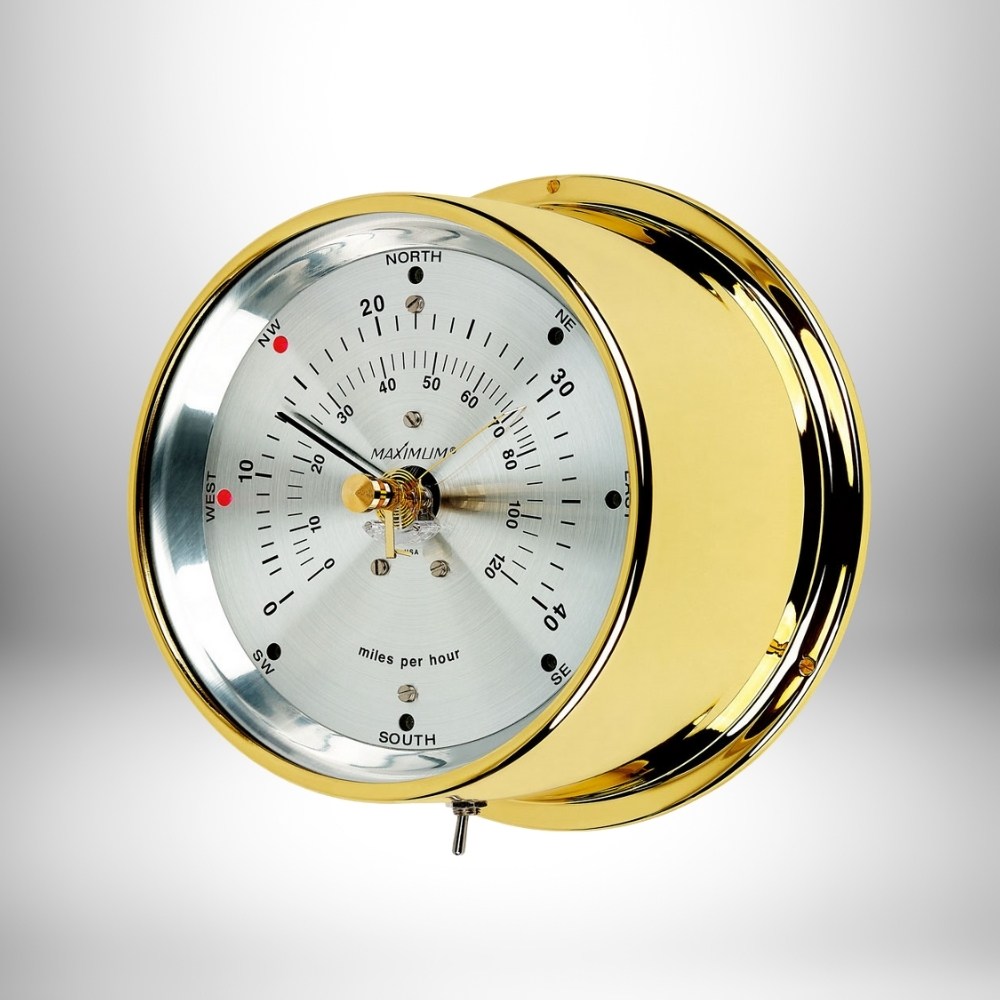
    We earn a commission when you buy through some links on this page. Cirrusly Weather is our sister store, owned by the same people as The Weather Station Experts. As an Amazon Associate I earn from qualifying purchases.

    Ambient Weather WS-5000

    Ambient Weather WS-5000

    4.4 / 5 Editorial rating

    The WS-5000 features a redesigned sensor suite, including an ultrasonic anemometer. Eliminating the cup anemometer found on other weather stations drastically reduces the number of moving parts and can measure wind speed as accurately as the cup-and-vane. This should extend its useable life as the traditional anemometer requires ongoing maintenance to ensure trouble-free use.

    Certain content that appears on this site comes from Amazon. This content is provided “as is” and is subject to change or removal at any time.