

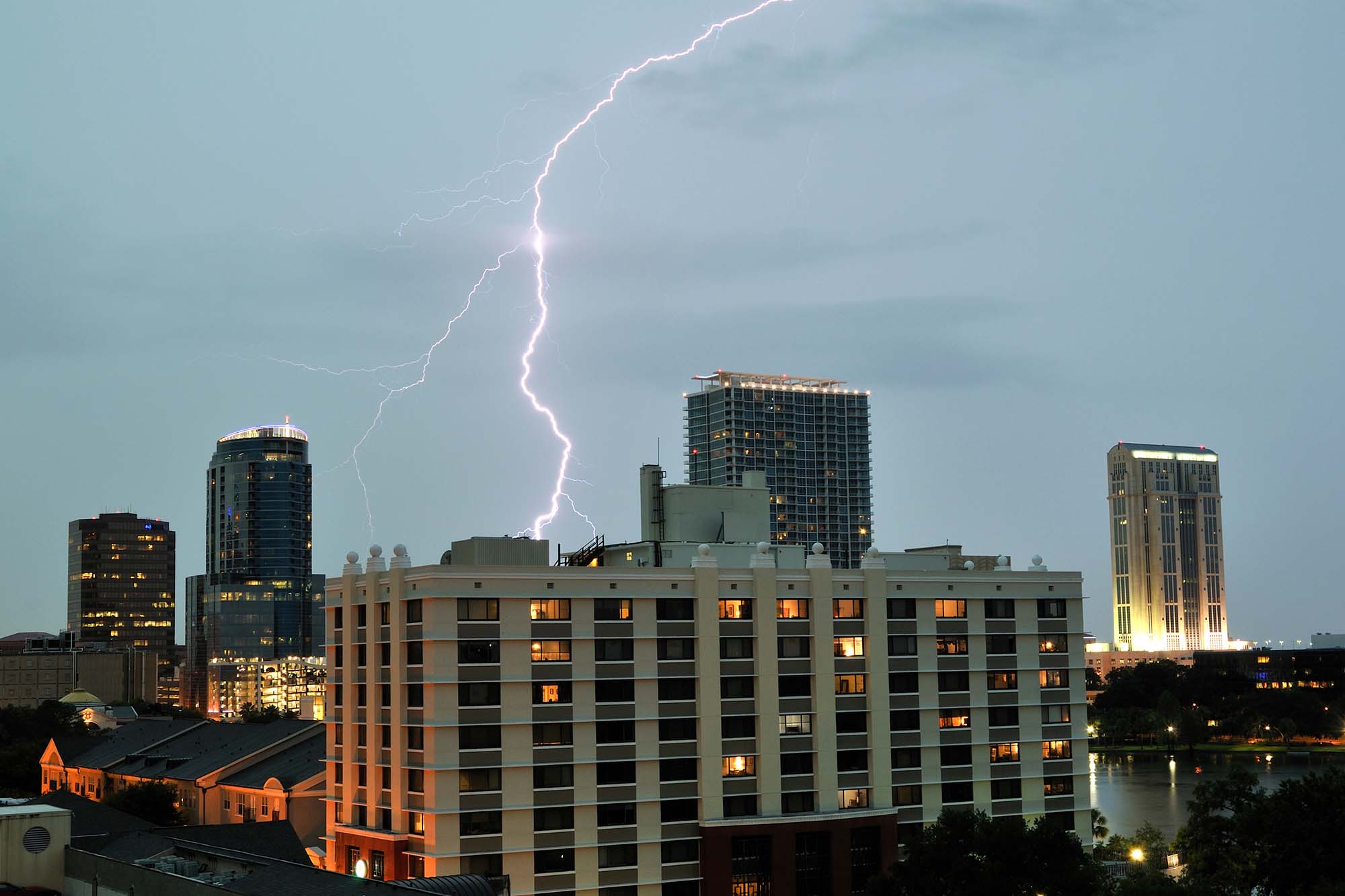
Thunderstorms are a regular occurrence during the spring and summer months for large swaths of the United States. As storm systems sweep across the country, the collision of warm tropical air with cooler, drier air to the north, known as a front, triggers these storms. However, this happens much more frequently in the stormiest cities in the US than in other areas.
Using official climate data from NOAA, we’ve compiled a list of the 10 stormiest cities in the US based on the average number of days with thunderstorms per year. So grab your umbrella and join us on this tour of our country’s stormiest locales.
What is the stormiest city in the US?
You might be surprised that the state with the most thunderstorms yearly is also called the Sunshine State: Florida. The top five stormiest cities on our list are all in Florida. That’s because the summer heat and the state’s notoriously high humidity create the perfect conditions for thunderstorms to form almost daily.
If you want Florida to live up to its nickname, visit during winter.
- Fort Myers, Florida: Fort Myers tops our list with an average of 89 thunderstorm days yearly.
- Tampa, Florida: Just a few hours north of Fort Myers, Tampa holds the number two spot with 82 thunderstorm days per year. Lightning often illuminates the city’s famous skyline.
- Tallahassee, Florida: Florida’s capital city is no stranger to storms, with an average of 81 thunderstorm days yearly. The city’s residents are well-prepared for the rumble of thunder and crack of lightning.
- Orlando, Florida: The city known for its theme parks and tourist attractions—most notably Walt Disney World—also gets its fair share of thunderstorms. Visitors and residents can expect about 80 stormy days per year in Orlando.
- West Palm Beach, Florida: Adding to Florida’s stormy reputation, West Palm Beach has an average of 79 thunderstorm days yearly. The city’s beautiful beaches are occasionally interrupted by the dramatic display of stormy skies.
- Lake Charles, Louisiana: We leave Florida behind and head to Lake Charles, Louisiana. This city experiences an average of 76 thunderstorm days yearly, making it the stormiest city outside of Florida.
- New Orleans, Louisiana: A city known for its vibrant culture, New Orleans also sees its fair share of storms. The Big Easy averages 75 thunderstorm days per year.
- Baton Rouge, Louisiana: The state capital of Louisiana, Baton Rouge, is another city with frequent thunderstorms. It has an average of 74 stormy days per year.
- Mobile, Alabama: Our first entry from Alabama, Mobile, sees an average of 73 thunderstorm days yearly. The coastal city is known for its historic architecture, rich history, and stormy weather. It’s also one of the rainiest US cities, measured by annual precipitation.
- Jackson, Mississippi: Rounding out our top 10 list is Jackson, Mississippi, with an average of 72 thunderstorm days yearly. Despite the frequent storms, the city boasts a diverse culture and rich history, making it an interesting place to visit.
Be Storm-Ready
We earn a commission when you buy through some links on this page. Cirrusly Weather is our sister store, owned by the same people as The Weather Station Experts. As an Amazon Associate I earn from qualifying purchases.
- 1
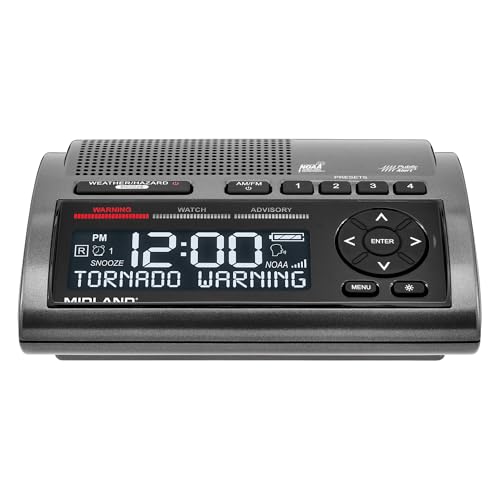
Midland WR400 Weather Radio with SAME
It might be one of the market’s most expensive desktop weather radios, but the Midland WR400 is the company’s top-end model and the best weather radio. We own the WR400: it does much more than alert you to severe weather. It also includes an alarm clock and can tune into AM and FM radio stations. If an alert comes through while listening to an AM or FM station, the WR400 automatically switches to the weather radio broadcast, allowing you to hear it. There’s even a USB port to charge a device. The Midland WR400 is Public Alert certified, meaning it can receive the standard SAME alerts and newer ones, including non-weather alerts. A large, easy-to-read display tells you the warning so you can react accordingly. The WR400 depends on 4 AA batteries for emergency power, but battery life will be an issue during long-term power outages.What we like
- Replaces your alarm clock
- 4 ‘AA’ for emergency power
- AM/FM radio and clock included
- USB-A port to charge a device
Keep in mind
- One of the most expensive weather radios on the market
- 2
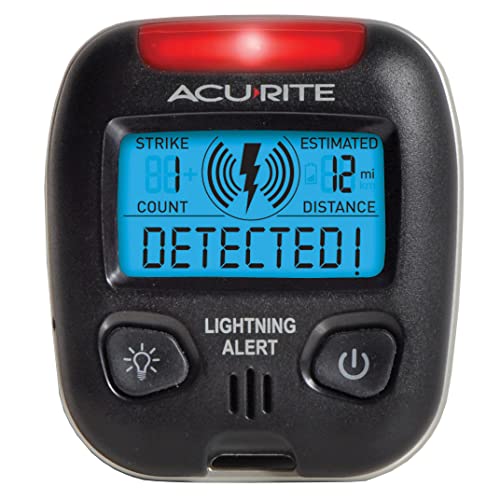
AcuRite 02020 Portable Lightning Detector
If you’re on a really tight budget and can accept a little less accuracy, the AcuRite 02020 Portable Lightning Detector is a good buy. While it is much more susceptible to interference than the above models, The AcuRite 02020 does an acceptable job in most situations. This Acurite lightning detector has a detection range of about 25 miles, with both a visual (a flashing red LED light on the top) and an audio alert when strikes occur. The screen will display strike distances each time it registers a strike and an overall strike count. The display is backlit, making it useful even in low-light situations. The biggest issue with the AcuRite 02020 is its susceptibility to interference and a tendency to get “stuck.” Buyers report problems with false strikes and that from time to time, the device would ask users to change their location but not resume operation when they do.
Certain content that appears on this site comes from Amazon. This content is provided “as is” and is subject to change or removal at any time.
When do the stormiest cities in the US typically see the most thunderstorms?
If you’re a fan of stormy weather, consider visiting these cities between June and September, typically the stormiest months in the above locations. Of course, most people would rather avoid stormy weather while on vacation. Additionally, the Deep South is the hottest and most humid at this time, so visiting in Spring and Fall will be drier and far more comfortable.
However, there’s one massive caveat to this. Tornado season starts early in this part of the country, typically by March or April, before ramping up in what is traditionally known as “Tornado Alley.”
Why are these states so stormy?
The stormiest cities in the US are primarily located in two regions: the southeastern United States and the Gulf Coast. The stormy weather in these regions is primarily due to warm, moist air from the Gulf of Mexico meeting cooler air from the north, creating ideal conditions for thunderstorm formation.
Additionally, these areas are prone to tropical storms and hurricanes, which can bring even more thunderstorms to the region. In Florida, the unique peninsula shape and its position between the Atlantic Ocean and the Gulf of Mexico also contribute to the high frequency of thunderstorms.
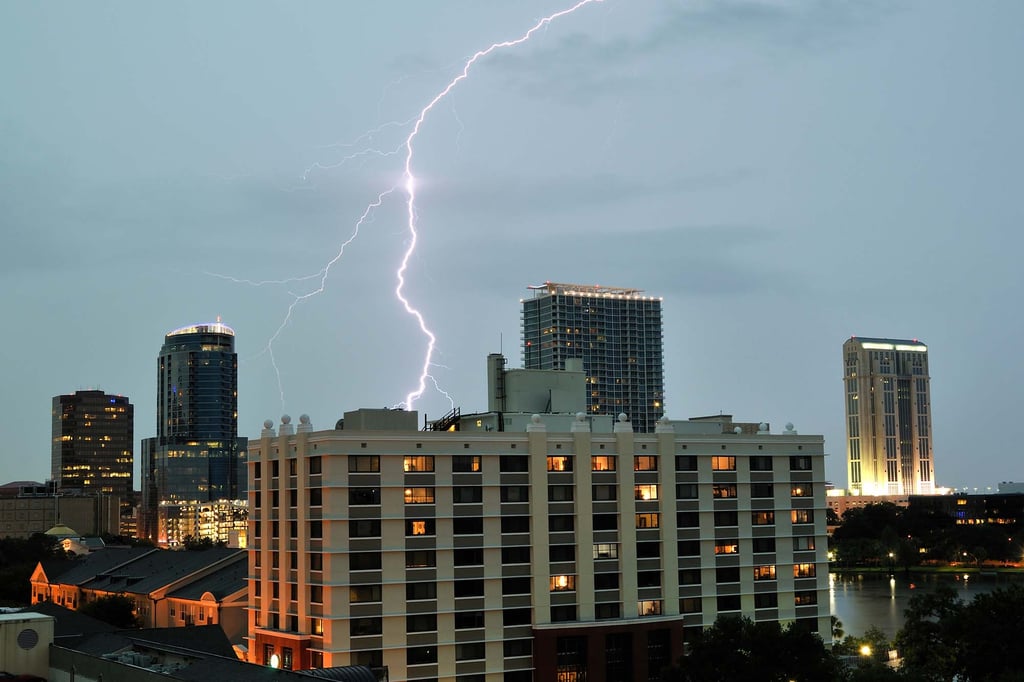
In conclusion, if you love stormy weather or want to experience the raw power of nature, the cities on our list are prime destinations for you. The southeastern United States and the Gulf Coast are rich in culture, history, and thunderstorms. Just remember to pack an umbrella and be prepared for the awe-inspiring spectacle of Mother Nature at her most dramatic.
We earn a commission when you buy through some links on this page. Cirrusly Weather is our sister store, owned by the same people as The Weather Station Experts. As an Amazon Associate I earn from qualifying purchases.
Weather Watch: An Introduction to America's Weather and Climate
 Weather Watch: An Introduction to America's Weather and Climate
Price and availability details
Product prices and availability are accurate as of the date/time indicated and are subject to change. Any price and availability information displayed on Amazon at the time of purchase will apply to the purchase of this product.
Certain content that appears on this site comes from Amazon. This content is provided “as is” and is subject to change or removal at any time.